Smartwatches
Polar Vantage M3
Polar's compact Vantage M3 brings dual-frequency GPS, offline maps, wrist ECG and a replaceable battery to a 53 g mid-range multisport watch with a 1.28-inch AMOLED screen.
Key figures at a glance
Gallery
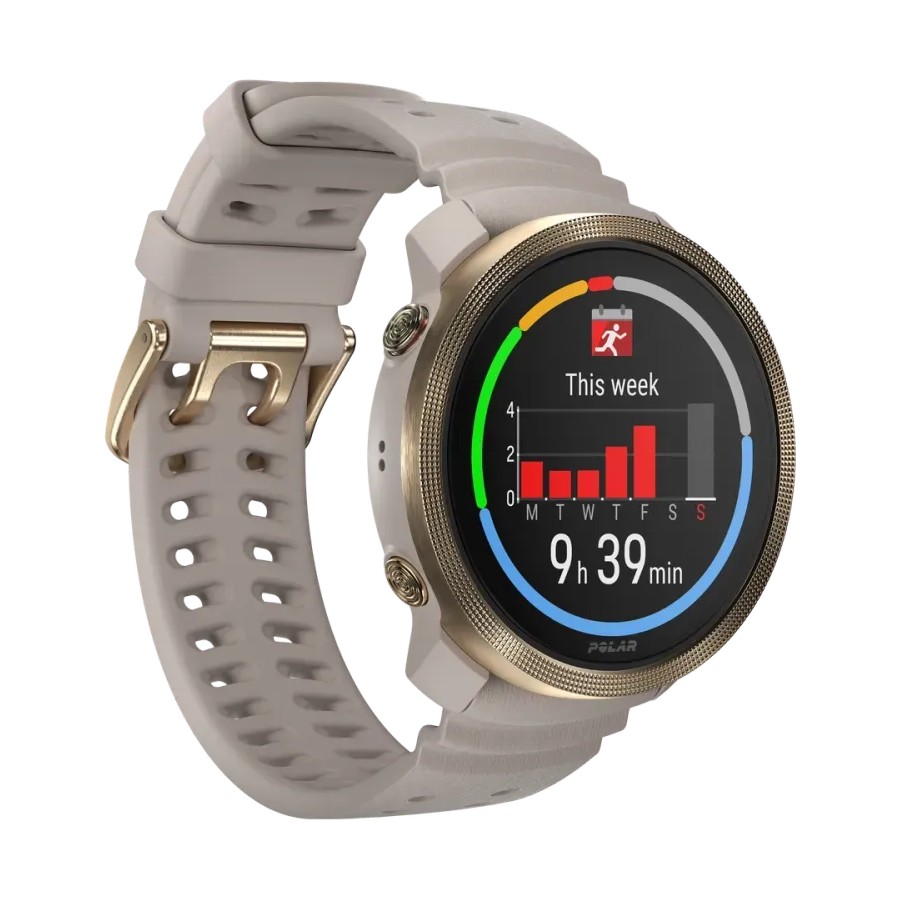
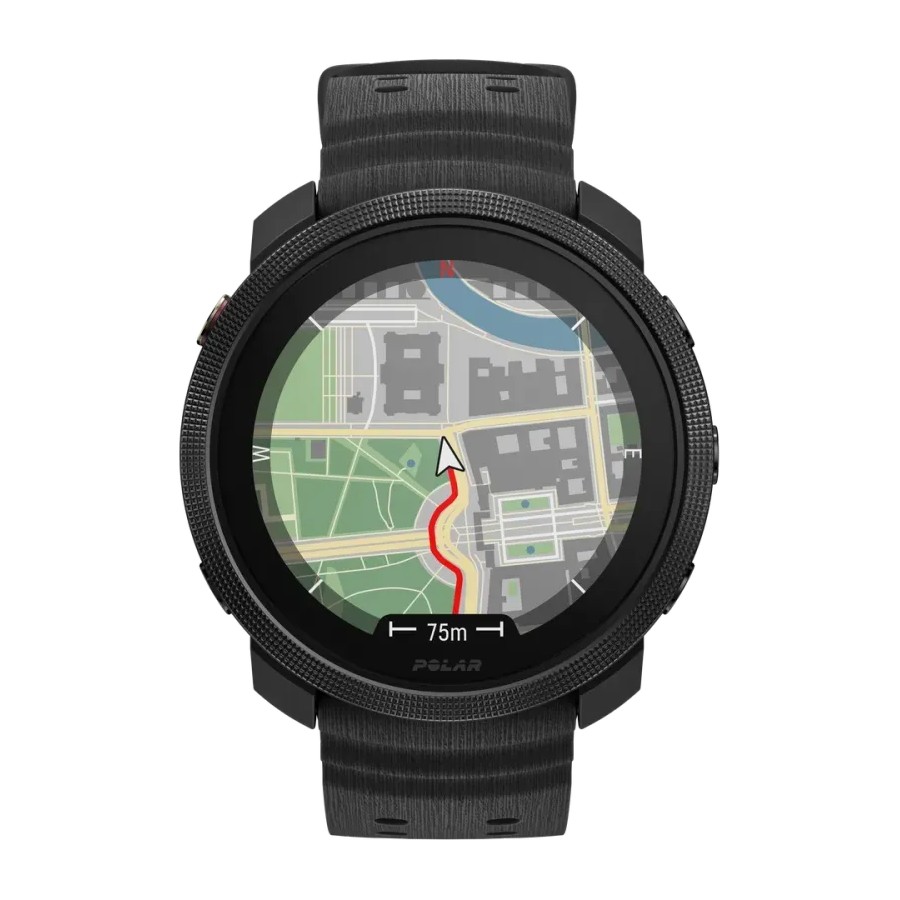
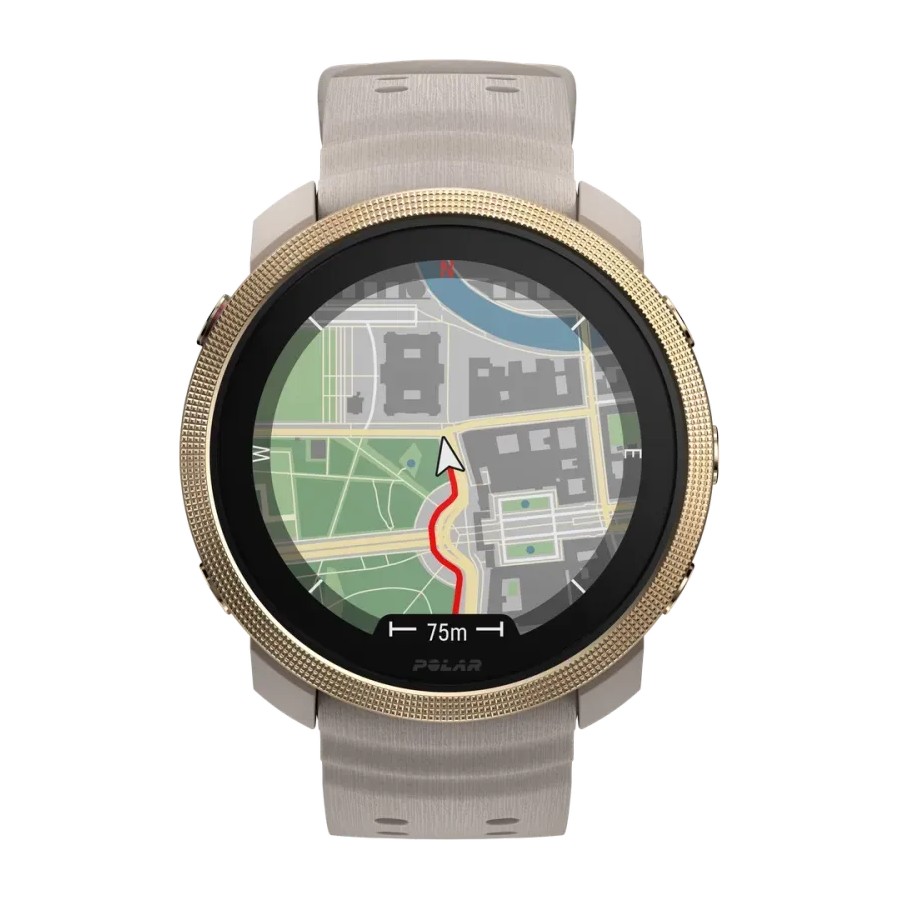
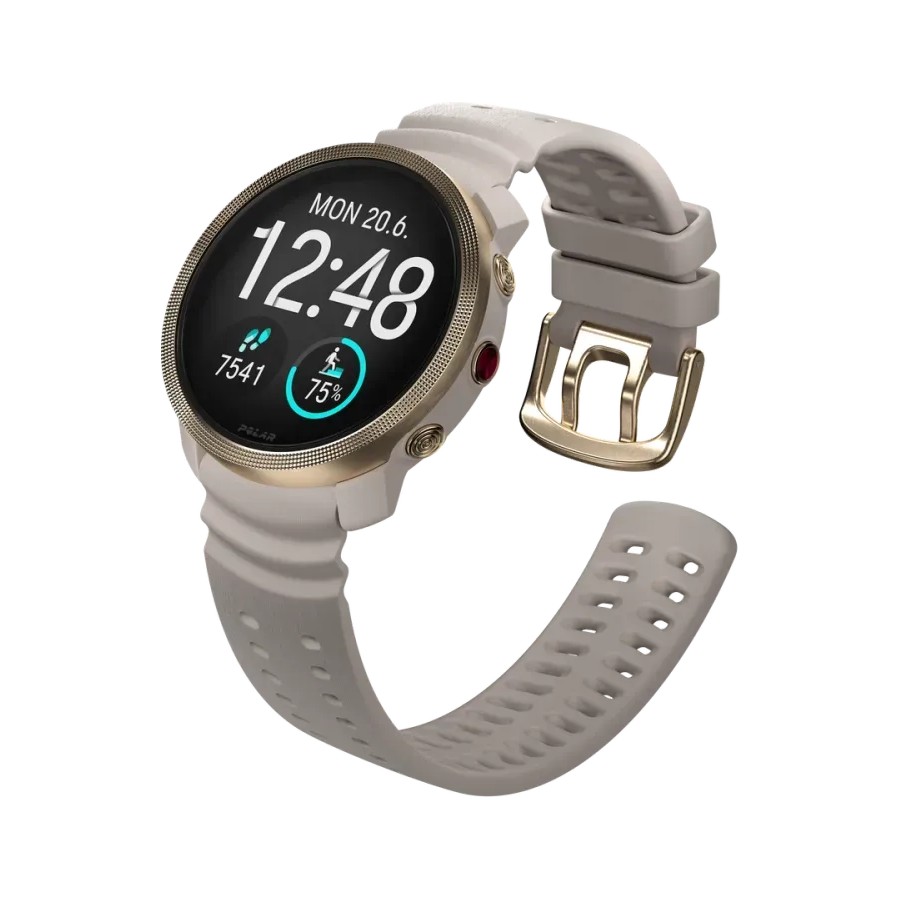
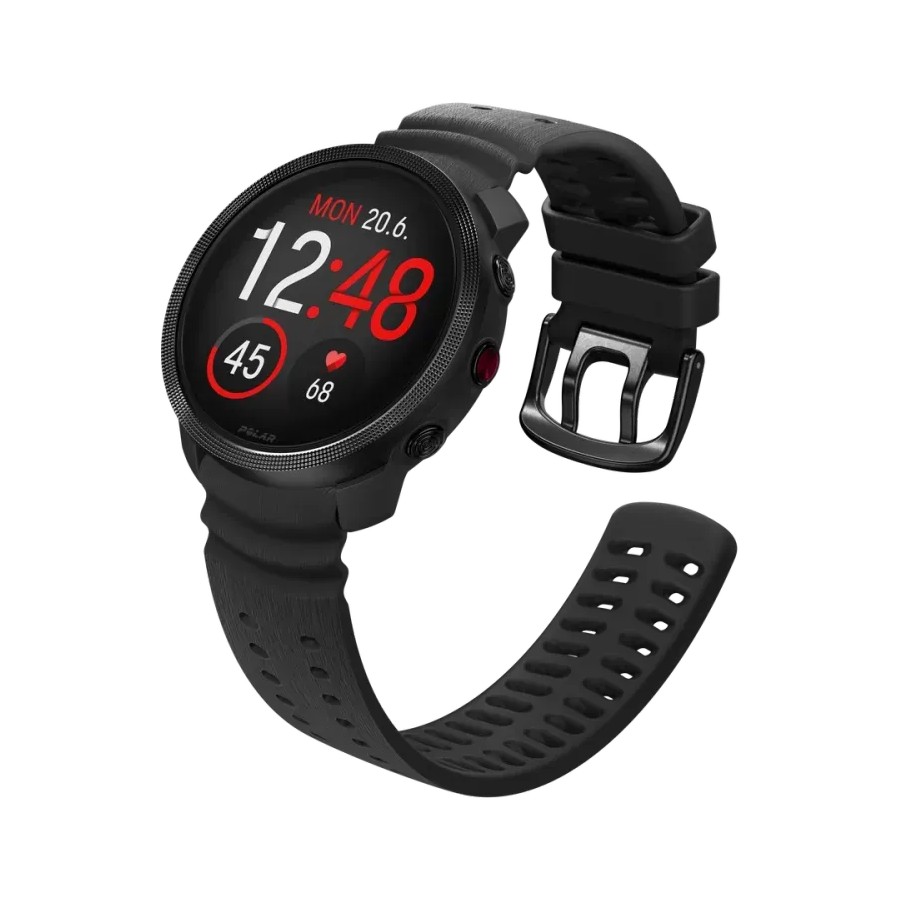
Specifications
- Display
- 1.28-inch AMOLED touchscreen, 416 x 416, Gorilla Glass 3, always-on option with ambient light sensor
- Body
- 44.7 x 44.7 x 12.2 mm; 53 g with wristband (35 g without); glass-fibre reinforced plastic case with stainless steel bezel; 22 mm quick-release silicone wristband; WR50 water resistance
- Battery
- Up to 7 days in smartwatch mode; up to 30 hours in training mode (Polar's spec table lists 27 hours performance, 90 hours eco and 8 days smartwatch); 310 mAh replaceable Li-Pol battery
- Storage
- 32 GB (offline maps), 37 MB memory, 275 MHz CPU
- Sensors
- Polar Elixir biosensing: 4th-generation optical heart rate, wrist-based ECG, SpO2, nightly skin temperature; barometer, magnetometer compass, accelerometer, gyroscope
- GPS
- Dual-frequency GPS (L1/L5) with GLONASS, Galileo, BeiDou and QZSS
- Navigation
- Preinstalled and upgradeable offline topographic maps, planned routes, breadcrumbs, komoot turn-by-turn guidance
- Connectivity
- Bluetooth LE (no ANT+), USB-C charging cable (proprietary connector)
- Software
- PolarOS; Polar Flow app; Training Load Pro, Nightly Recharge, Smart Coaching; over 150 sport profiles
- Colors
- Night Black, Greige Sand
The Polar Vantage M3 is the Finnish company's attempt to bring features that used to be reserved for its flagship sports watches into a smaller, lighter and more affordable body. Announced on 23 October 2024 with a recommended price of 399.90 in both euros and US dollars, it continues the long-running Vantage M line with a 1.28-inch AMOLED touchscreen, dual-frequency GPS, offline maps and the company's Elixir biosensing platform. This review is based on the published specifications and Polar's own product material, and it flags the places where Polar's pages disagree with one another so that you know what to verify before buying.
Where it sits in the lineup
Polar describes the Vantage M3 as a multisport watch for people who train in several disciplines and still want something that looks acceptable on the wrist at a desk. It sits between the rugged outdoor models such as the Polar Grit X2 and the lighter lifestyle-oriented devices like the Polar Street X. Compared with the Grit X2 it gives up sapphire glass in exchange for a lighter, more compact body. Polar states that more than 80 percent of its users train in three or more sports, and the M3 is aimed squarely at them, with support for over 150 sport profiles. If you want a rival from another brand to hold it against, the Polar Vantage M3 vs Garmin Forerunner 970 page lays out the numbers.
Design and display
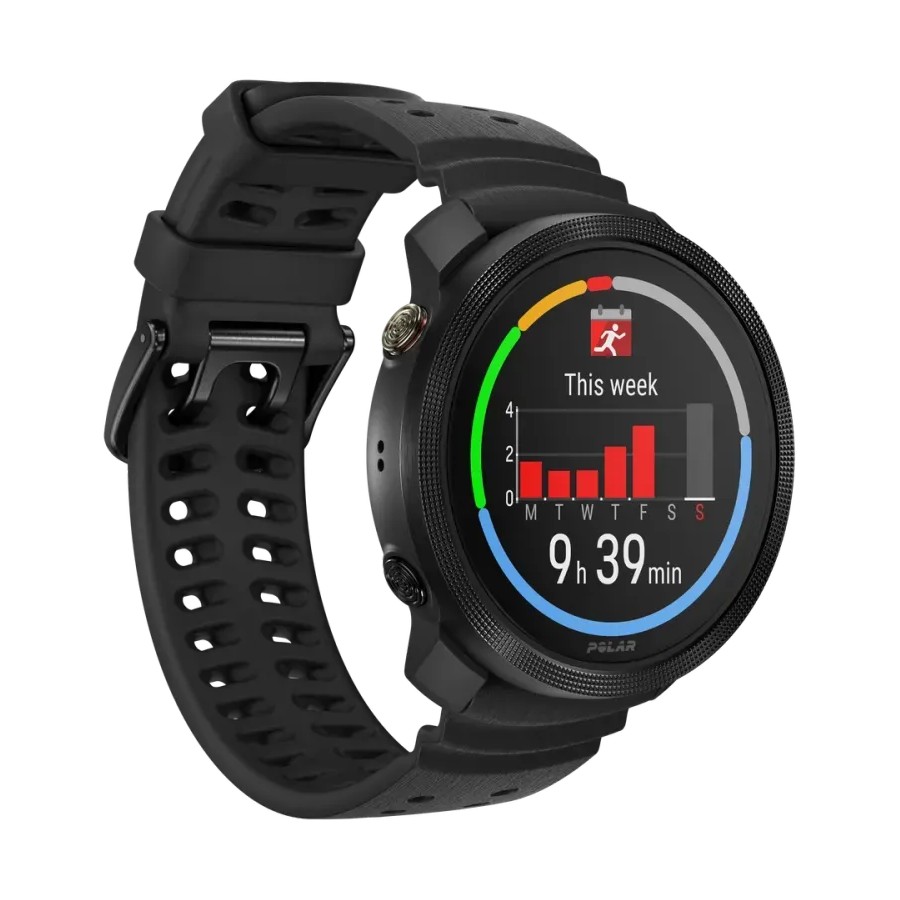
The case measures 44.7 x 44.7 x 12.2 mm and weighs 53 g with the supplied silicone wristband, or 35 g without it. The case is a glass-fibre reinforced plastic with a stainless steel bezel, and the lens is Gorilla Glass 3, which resists scratches but is not as hard as sapphire. Water resistance is rated WR50, suitable for pool swimming and showers but not for high-impact water sports. The wristband uses a quick-release mechanism and a standard 22 mm width, so third-party straps are easy to fit. Two finishes are offered: Night Black, which is all dark, and Greige Sand, which pairs a pale band with a gold-toned bezel and buckle. Polar quotes an operating temperature range of -20 to 50 degrees Celsius.
The screen is a 1.28-inch AMOLED touchscreen with a resolution of 416 x 416 pixels. It can stay always on, and an ambient light sensor adjusts brightness. Polar also lets the display double as a flashlight, a small but genuinely useful feature for early-morning runs. The watch has physical buttons alongside the touchscreen, which is the right combination for sweaty or wet conditions. A 416-pixel panel at this size is sharp enough that text and map details are comfortably legible, although Polar has not published a peak-brightness figure.
Navigation and training tools
Navigation is the biggest step up from earlier Vantage M watches. The M3 uses dual-frequency GPS (L1 and L5 bands) alongside GLONASS, Galileo, BeiDou and QZSS, which Polar says delivers faster fixes and more accurate tracking near tall buildings or under dense tree cover. Preinstalled, upgradeable offline topographic maps are stored in 32 GB of memory, and the watch supports planned routes, breadcrumb trails and turn-by-turn guidance through the komoot service, which includes the owner's home region for free. Polar's published processor figures are modest: a 275 MHz CPU and 37 MB of working memory, so expect competent rather than lightning-fast map redraws.
On the training side, Polar's software stack includes Training Load Pro, Energy Sources, wrist-based running power, a Season Planner, a Running Program and swimming metrics, plus Nightly Recharge for overnight recovery. The watch runs the company's PolarOS platform and syncs to the Polar Flow app over Bluetooth LE. External sensors such as the Polar H10 and Verity Sense work, as do Bluetooth cycling power meters and speed or cadence sensors. One caveat is that the M3 does not support ANT+, so older ANT+ sensors will not pair.
Health sensing
The Elixir biosensing suite is Polar's main health talking point. It includes a fourth-generation optical heart-rate sensor, wrist-based ECG readings, blood oxygen (SpO2) and nightly skin temperature, plus a barometer, magnetometer compass, accelerometer and gyroscope. Polar says the optical sensor was redesigned to reduce interference and deliver its most accurate wrist readings so far, and that claim is worth treating as a manufacturer statement rather than an independent measurement. Polar also notes that the temperature measurement is not intended for medical use, and the same caution applies to the other wellness metrics: they are guides for training and recovery rather than diagnostic tools.
Battery life and charging
The watch uses a 310 mAh rechargeable Li-Pol battery that is designed to be replaceable, which Polar presents as a sustainability benefit. In its press release Polar quotes up to 30 hours of training or up to 7 days in smartwatch mode. The product page repeats those figures and adds up to 70 hours in an eco training mode, but the technical specification table on the same page lists 27 hours in performance mode, 90 hours in eco mode and 8 days in smartwatch mode. Those differences probably reflect different test settings or firmware, and they are small enough not to change the overall picture: roughly a week between charges with light use and a long weekend of continuous training. Always-on display and heavy GPS use will shorten that. Charging uses a USB-C cable with a proprietary connector on the watch end.
Who it is for
The Vantage M3 suits runners, cyclists and triathletes who want a capable training computer without the weight, price or visual bulk of an expedition watch. At 53 g it is comfortable overnight, which matters because the sleep and recovery tools need continuous wear to be useful. Existing Polar users stepping up from an older Vantage M or Ignite will gain the most from the AMOLED screen and maps. Beginners may find the full training-load vocabulary more than they need, though the Smart Coaching features give them a path to grow into it.
What happens outside training matters too. The watch shows weather information with a two-day forecast, can be tailored with widgets and custom watch faces, and its training views can be arranged in Polar Flow so that only the numbers you really need appear on screen. That favours people who wear the watch all day rather than only during workouts. Anyone shopping for a device for multi-day expeditions, where maps, battery and case durability take priority over weight, is more likely to be served by the larger outdoor models Polar sells alongside it.
Compromises to weigh
- No ANT+: only Bluetooth sensors are supported, so legacy ANT+ equipment will not connect.
- Plastic case and Gorilla Glass 3: lighter and cheaper than titanium and sapphire, but less scratch-proof over years of hard use.
- Inconsistent battery figures: Polar's own pages quote different hours for training modes, so treat any single number as approximate.
- Modest processor: a 275 MHz CPU suggests simple, functional rather than flashy animations.
- Price: at 399.90 it is not a budget option, and the broader market offers other multisport choices, which you can see on the rankings page.
Even so, the M3 makes a persuasive case. It combines a bright AMOLED display, dual-frequency GPS, offline maps, ECG and a replaceable battery in a watch that weighs less than many fitness bands did a few years ago. For athletes who split their week across sports and want one device that follows them through training and sleep, it is one of the more thoughtful mid-range designs Polar has released.
Where it ranks
Compare Polar Vantage M3 with similar devices
More from Polar
Frequently asked questions
When was the Polar Vantage M3 released?
The Polar Vantage M3 was released on 2024-10-23, according to the manufacturer’s published information.
How much does the Polar Vantage M3 cost?
The estimated range for the Polar Vantage M3 is $360 to $440 in US dollars, based on the launch list price. Actual prices vary by country, retailer and storage option.
What are the main specs of the Polar Vantage M3?
Headline figures for the Polar Vantage M3: Battery life: 7 days. The full specification table is further up this page.
Is the Polar Vantage M3 worth buying?
That depends on your priorities. Use the editorial review on this page for our view, check the rankings above to see where the device stands on battery, display and camera, and compare it directly with similar models before you decide.