Smartwatches
Apple Watch Ultra 2
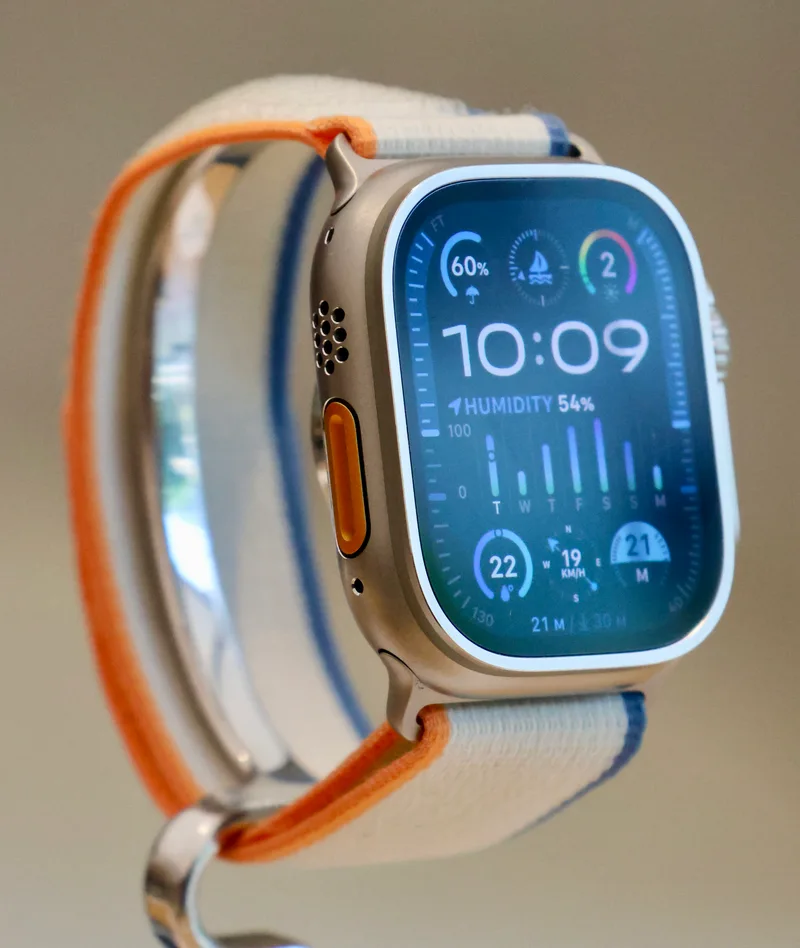
Apple's rugged 49mm titanium watch gets the S9 chip, a 3,000-nit display and the double tap gesture, and stays the model built for endurance sport, diving and long battery days.
Key figures at a glance
Gallery
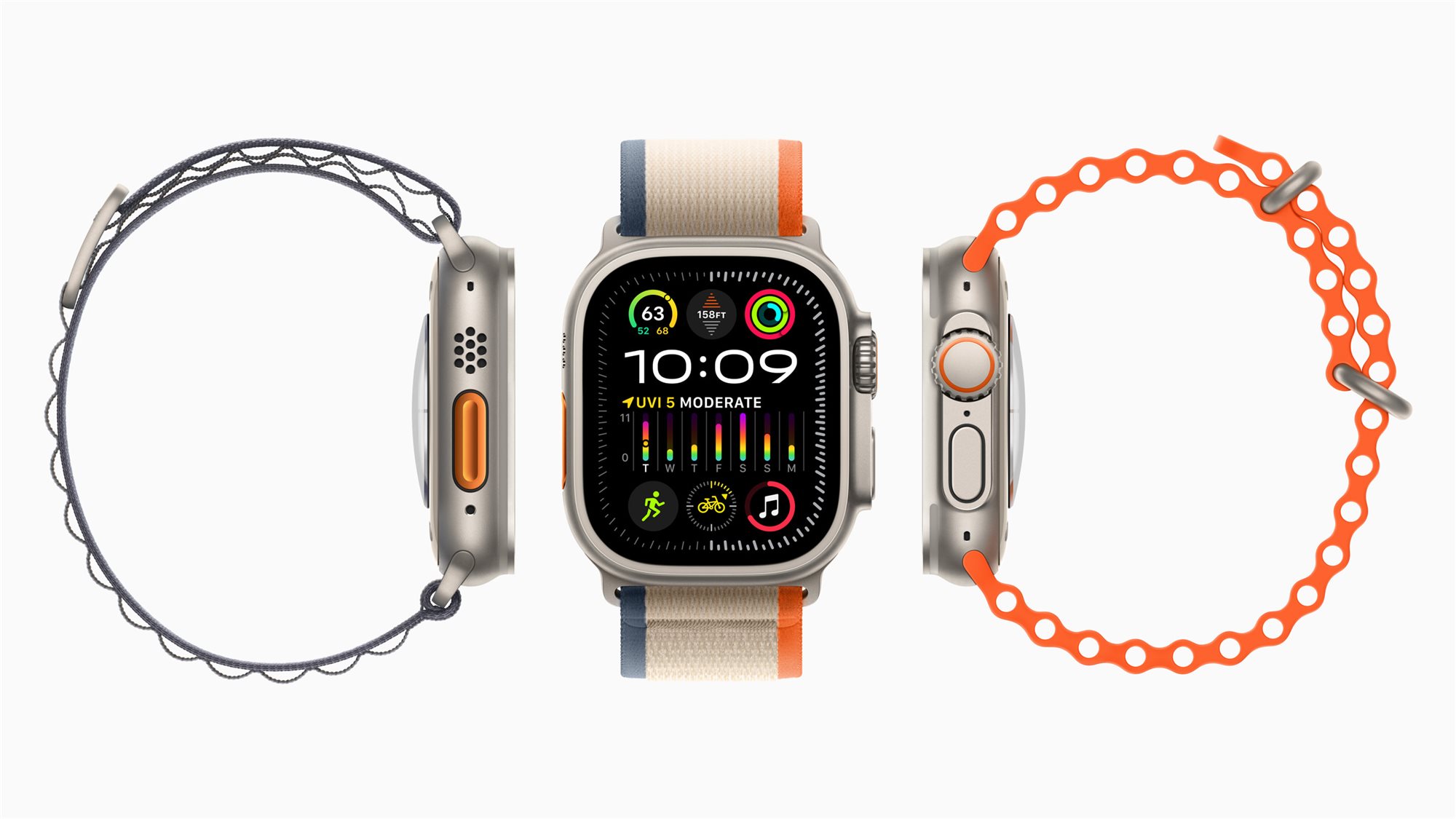
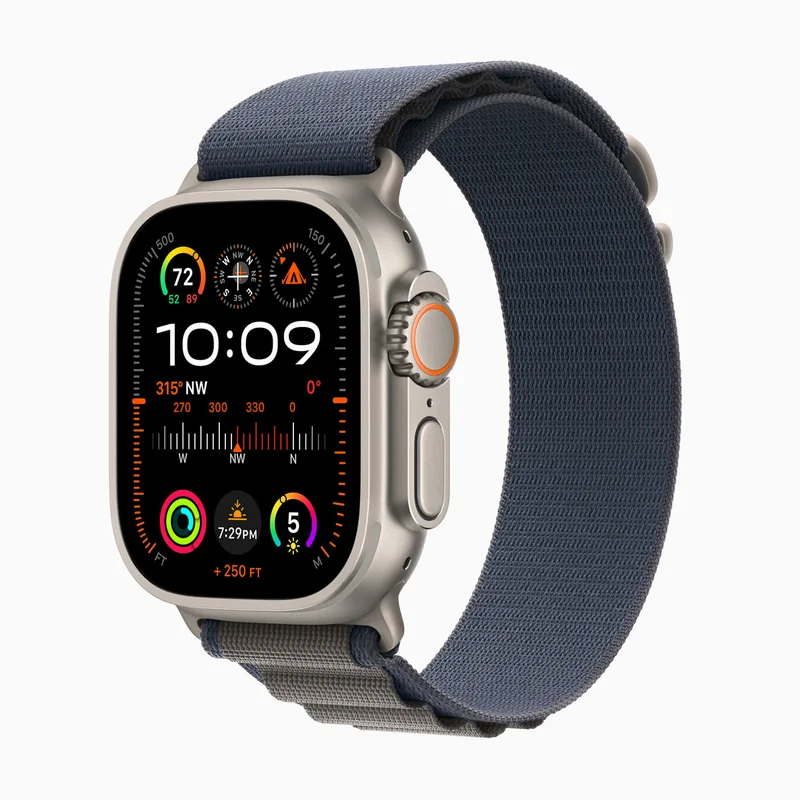
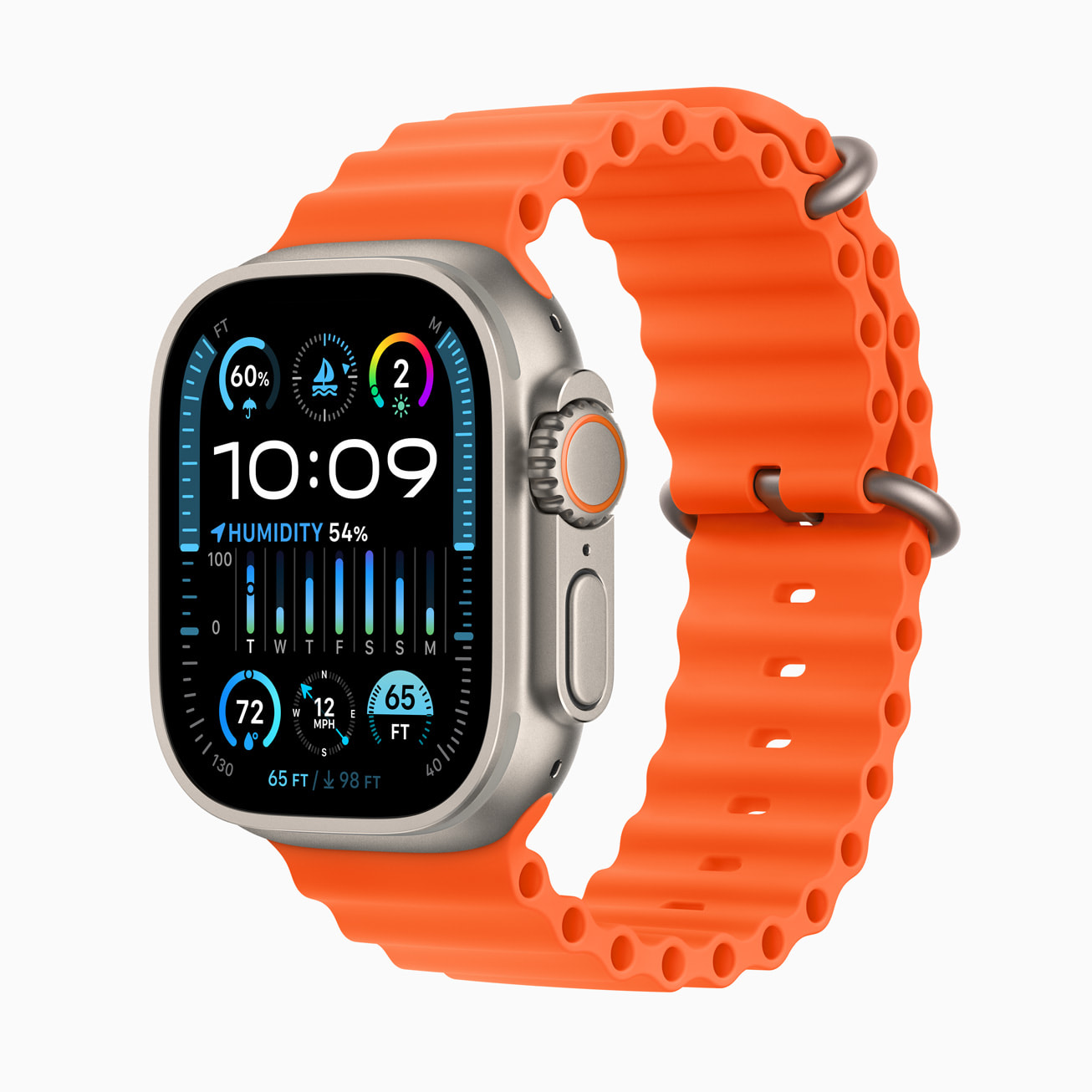
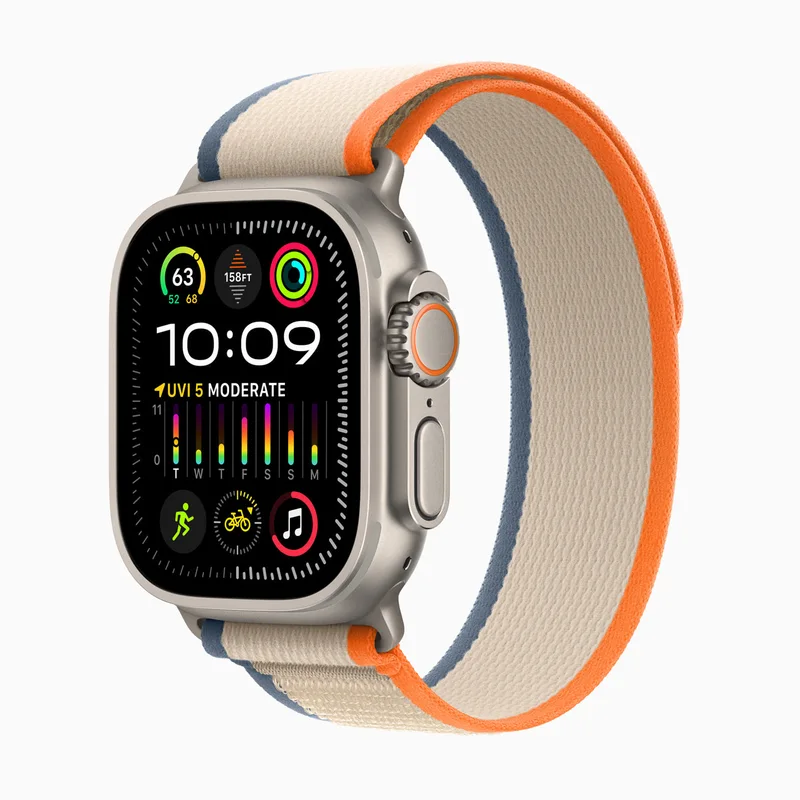
Specifications
- Case Size
- 49mm titanium
- Display
- Flat crystal, up to 3000 nits
- Chipset
- Apple S9 SiP, 2nd-gen Ultra Wideband
- Battery
- Up to 36 hours; up to about 60 hours in low-power mode
- Health Sensors
- Heart rate, water temperature, sleep apnea detection, blood oxygen (calculated on paired iPhone)
- Water Resistance
- WR100 / EN13319, recreational dives to 40 m
- Connectivity
- Cellular, dual-frequency GPS (L1 + L5)
- OS
- watchOS 10 (at launch)
The Apple Watch Ultra 2 is the second generation of Apple's outdoor and endurance smartwatch. The original Ultra, introduced in September 2022, was described as a watch for endurance athletes and outdoor recreation, and it set out a formula that still defines the line: a rugged titanium case, a wider 49 mm body, a larger and brighter display, multi-band GPS, a much bigger battery and extra tools for divers. The Ultra 2 keeps that formula and updates the electronics inside. This page covers what it is, what changed, what its limits are and how it fits into the wider Apple Watch range.
Timeline
Apple announced the Apple Watch Ultra 2 at its "Wonderlust" event on 12 September 2023, next to the Apple Watch Series 9, and it went on sale on 22 September 2023. A black colour option followed on 9 September 2024, when Apple also introduced a sleep apnea detection feature. The next model, the Apple Watch Ultra 3, was introduced on 9 September 2025 and released on 19 September 2025 with 5G connectivity and satellite messaging, and an Ultra 4 followed at the September 2026 event. If you are weighing it against Apple's mainstream watch, the Watch Series 10 vs Watch Ultra 2 table lays the specifications side by side, and the Watch Series 10 page describes the thinner everyday model.
Case, size and materials
What sets the Ultra apart from the ordinary Apple Watch is the enclosure. The case is titanium and measures 49 mm, where the mainstream watch is offered in two smaller sizes. The display glass is flat, which helps protect the edges of the screen, and the design is meant for the impacts and scrapes that come with climbing, running and water sport. The Ultra also has a new orange Action button on the left side that can be mapped to different functions, such as starting a workout, marking a waypoint or triggering the emergency siren. Alongside the Digital Crown and the side button used for Control Center and payments, it gives you three hardware controls that are easy to use with gloves or wet fingers. Apple's band mechanism lets you swap straps without special tools.
Display
Compared with the mainstream models, the Ultra has a larger display, and the Ultra 2 raised the peak brightness from 2,000 to 3,000 nits. That is the number to think about if you use the watch on a bright mountain or on a boat: readability in direct sunlight is one of the main reasons people choose this model. The same brightness increase was applied to the Series 9 released alongside it.
S9 chip, double tap and on-device Siri
Inside is the Apple S9 system-in-package, which uses the energy-efficient cores of the A16 Bionic together with a faster graphics unit and a four-core Neural Engine, and improved power efficiency. It also carries a second-generation Ultra Wideband chip, shared with the iPhone 15, with improved precision and longer range for finding a paired iPhone. The watch shipped with watchOS 10 and supports on-device Siri and a gesture called double tap, which lets you answer a call or control an app by tapping your index finger and thumb together, useful when the other hand is holding a trekking pole or a leash.
Battery life
Battery endurance is the Ultra's main advantage over the mainstream range. The first-generation Ultra had a battery 76 percent larger than that of the Series 8 and Apple rated it at 36 hours of typical use, compared with 18 hours for the standard watch, and the Ultra 2 keeps the 36-hour rating. A low-power mode that reduces heart rate readings and GPS polling can stretch this to roughly 60 hours. One reviewer of the first model noted that Apple's estimates were conservative, getting closer to 48 hours in real use with regular exercise and no power saving. Charging is inductive, and all Ultra models support fast charging with the USB-C Magnetic Fast Charger.
Navigation, connectivity and safety
The Ultra supports multi-band GPS on the L1 and L5 frequencies, which improves accuracy in places where signals bounce, such as between buildings or in canyons. All Ultra models include cellular connectivity, so you can make calls and send messages without the phone nearby. The watch also contains an emergency siren, a feature designed to attract attention in an emergency. Combined with the compass and backtracking features introduced in watchOS 9, this makes the Ultra a reasonable tool for hikers who want to retrace their route.
Diving and water
The Ultra has a water temperature sensor and is certified to WR100 and EN13319. Apple rates it for recreational diving to a depth of 40 metres (130 feet). The included Depth app shows depth and water temperature, and Apple partnered with Oceanic Worldwide to offer Oceanic+, a subscription app with more advanced dive-computer functions. The Series 10 later added similar depth and water temperature features for the mainstream range, so diving is no longer the sole reason to choose the Ultra, but the higher rating and sturdier body remain differentiators.
Health features and the blood oxygen story
Like every Apple Watch, the Ultra measures heart rate by shining green and infrared light into the skin and reading how much light returns; the watch adapts the sampling rate and LED brightness as needed. The Ultra 2 also gained sleep apnea detection in September 2024, a feature cleared by the FDA that is supported by the Series 9, the Series 10 and the Ultra 2.
Blood oxygen monitoring had a complicated history on this model. Because of a patent dispute, Apple temporarily halted US sales of the Series 9 and Ultra 2 in December 2023 ahead of an import ban. Sales resumed, but units sold after 18 January 2024 had the blood oxygen feature disabled in the United States. On 14 August 2025 Apple re-enabled the measurement for affected watches through software updates, with a redesign: the watch collects the raw data, and the calculation is done on the paired iPhone rather than on the watch. If blood oxygen matters to you, check current availability in your country.
Environmental claims
Apple marketed the Series 9 and Ultra 2 as its first carbon-neutral products, depending on the case material and band, and said that emissions per watch were cut by 81 percent for the Ultra 2. Critics said that the claim relied partly on carbon offsets and questioned the reliability of forestry credits, and the European Union announced a ban on most uses of the term "carbon neutral" in advertising by 2026. Reading these claims with care is sensible; the reduction in manufacturing emissions reported by Apple is separate from the debate over the offsets.
Who should consider it
The Ultra 2 suits runners, hikers, cyclists, swimmers and divers who want a watch that lasts more than a day and a half, has a very bright screen and can take punishment. If you mainly want notifications and everyday fitness tracking in a slimmer package, the mainstream watch is a better fit. To see the wider field, visit the smartwatches category, read our reviews, and check the FAQ for how we compile specifications.
Where it ranks
Compare Apple Watch Ultra 2 with similar devices
More from Apple
Frequently asked questions
When was the Apple Watch Ultra 2 released?
The Apple Watch Ultra 2 was released on 2023-09-22, according to the manufacturer’s published information.
What are the main specs of the Apple Watch Ultra 2?
Headline figures for the Apple Watch Ultra 2: Battery life: 36 h. The full specification table is further up this page.
Is the Apple Watch Ultra 2 worth buying?
That depends on your priorities. Use the editorial review on this page for our view, check the rankings above to see where the device stands on battery, display and camera, and compare it directly with similar models before you decide.