Smartwatches
Fitbit Charge 6
Fitbit's Charge 6 adds Google Maps, Google Wallet, YouTube Music controls, built-in GPS and heart-rate sharing with gym equipment to a tracker rated for up to 7 days of battery; launched at $159.95.
Key figures at a glance
Gallery
Specifications
- Battery
- Up to 7 days (Fitbit estimate, default settings)
- Sensors
- Heart rate with machine-learning algorithm (up to 60% more accurate than Charge 5 in HIIT, spinning and rowing per Fitbit), ECG app (select countries), EDA stress scan, SpO2, heart rate variability, breathing rate
- Navigation
- Built-in GPS; Google Maps turn-by-turn directions
- Features
- Google Wallet contactless payments, YouTube Music controls (Premium subscription), 40+ exercise modes, heart rate broadcast to compatible gym equipment over encrypted Bluetooth, Zoom + Magnification accessibility feature
- Controls
- Haptic side button
- Compatibility
- Android 9.0 or newer, iOS 15 or newer, Google Account required
- Subscription
- 6 months of Fitbit Premium included with device
- Colors
- Obsidian, Porcelain, Coral
The Fitbit Charge 6 is the sixth generation of Fitbit's flagship fitness tracker, announced on 28 September 2023 with a launch price of $159.95. It keeps the slim band shape that has defined the Charge line, but changes what the band can do: it adds Google Maps and Google Wallet to a Fitbit tracker for the first time, brings YouTube Music controls to the wrist, introduces a haptic side button and uses a new heart-rate algorithm that Fitbit says was carried over from its Pixel Watch work. This page is a review based on the published specifications and manufacturer information. It covers what is new, what Fitbit claims and what you should weigh before choosing a tracker over a full smartwatch.
Where it sits in the lineup
The Charge 6 sits above Fitbit's cheaper Inspire trackers and below the Fitbit and Pixel smartwatches. Its job is to give people the health and exercise data of a watch in a lighter, longer-lasting body. If you want a round watch with more apps, the Pixel Watch 3 is the higher step in Google's family; if you prefer another brand's approach to fitness, the Garmin Vivoactive 5 and the Huawei Band 10 are obvious alternatives. A direct table is available at Fitbit Charge 6 vs Garmin Vivoactive 5. Fitbit's own announcement said the tracker opened for pre-order that day, with worldwide availability following later in the autumn, so the date shown on this site is the announcement date.
Heart-rate tracking and the sensor suite
The main hardware story is accuracy. Fitbit states that the Charge 6 delivers the most accurate heart-rate tracking it has built into a tracker, thanks to improved sensors and a machine-learning algorithm adapted from the Pixel Watch. In the company's own testing, heart-rate readings during vigorous activity such as HIIT, spinning and rowing were up to 60 percent more accurate than on the Charge 5. The fine print explains that the figure is based on 90th-percentile error from 2023 tests using pre-production units and applies only to those exercises, so it is a useful direction rather than a guarantee for every workout. Better heart-rate data also feeds other calculations, including calories, Active Zone Minutes, the Daily Readiness Score and the Sleep Score.
Beyond heart rate, the tracker offers an ECG app for checking heart rhythm for signs of atrial fibrillation, available only in selected countries and not intended for users under 22, along with high and low heart-rate notifications. It also measures blood oxygen saturation, heart-rate variability and breathing rate, and an electrodermal activity (EDA) scan that gauges the body's stress response and offers guidance. Fitbit notes that the SpO2 feature requires more frequent charging and is not a medical tool.
Workouts and gym connections
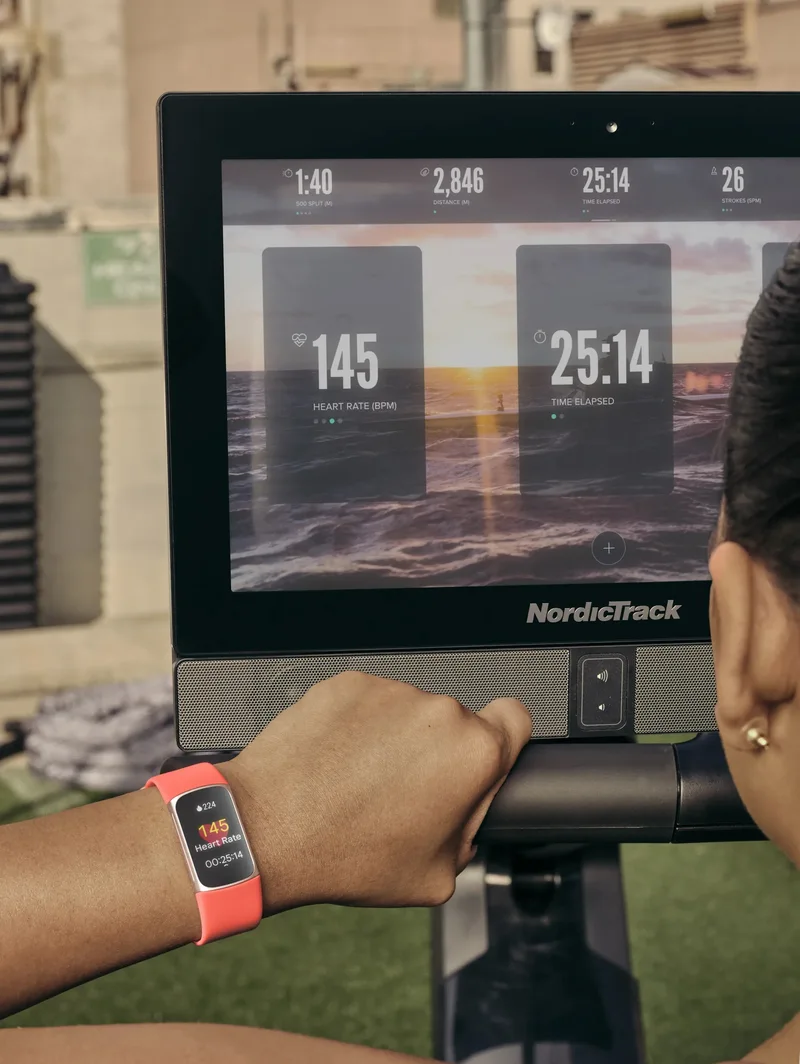
The Charge 6 offers more than 40 exercise modes, 20 of which are new, including HIIT, strength training and snowboarding. Built-in GPS lets you track an outdoor run or ride without carrying a compatible phone. One of the more distinctive additions is the ability to broadcast your heart rate over encrypted Bluetooth to compatible gym equipment and fitness apps. Fitbit names NordicTrack, Peloton, Concept2 and Tonal as examples, so your live heart rate can appear on the screen of the machine, and also in popular fitness apps on a phone or tablet. This depends on the machine supporting the Bluetooth heart-rate profile, which Fitbit says more machines will adopt.
Google Maps, Wallet and YouTube Music
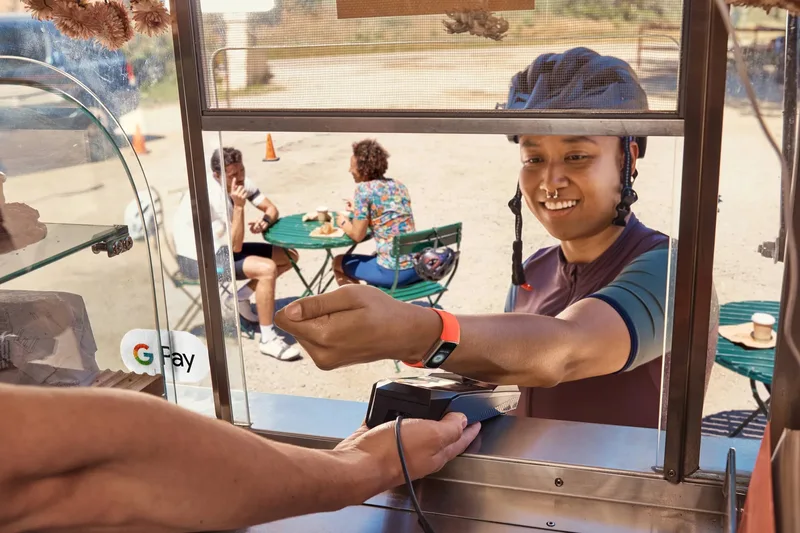
For the first time on a Fitbit tracker, the Charge 6 includes Google Maps for turn-by-turn directions and Google Wallet for contactless payments. A tracker with a narrow screen is not the most comfortable navigator, but the idea is to leave the phone in a bag while walking to a new place. Fitbit's footnote adds that Google apps require a compatible phone to be within Bluetooth range and are not available in all countries or languages, so check the status in your region. YouTube Music controls let you start, stop and skip songs from the wrist, and subscribers to YouTube Music Premium can get workout mixes recommended based on their exercise; this needs a paid subscription and a phone nearby.
Controls and accessibility
Fitbit describes a new haptic side button on the Charge 6, a physical control that responds with a tactile buzz when pressed, so you can navigate without relying on touch alone. It is a small change, but it affects daily use, for example with wet fingers during a workout. Fitbit also describes its first accessibility feature on a Fitbit device, Zoom + Magnification: a couple of taps anywhere on the screen enlarge text for people who find small type hard to read.
Battery life
Fitbit rates the battery at up to 7 days. The footnote explains that the figure is based on testing in California in mid-2023 with pre-production hardware and software, at default settings and with a median Fitbit user's usage pattern, and that use of certain features reduces battery life. Continuous GPS workouts, an always-on setting if you choose one, and SpO2 measurement will bring the number down, so a heavy exerciser should expect fewer days than a casual user. Fitbit does not publish a battery capacity in the announcement.
Health insights and Premium
The Charge 6 provides a Sleep Score each morning, based on time in the different sleep stages, heart rate during sleep and restlessness, and a Stress Management Score that combines several signals. The Daily Readiness Score, which recommends activity levels based on your recovery, is a Fitbit Premium feature. Every Charge 6 includes six months of Premium with an eligible purchase, after which new and returning members pay $9.99 a month; the membership must be activated within 60 days of device activation. Premium also unlocks workout and mindfulness sessions. Without Premium, the tracker still records activity, sleep and heart rate, but some insights are hidden.
Colours and bands
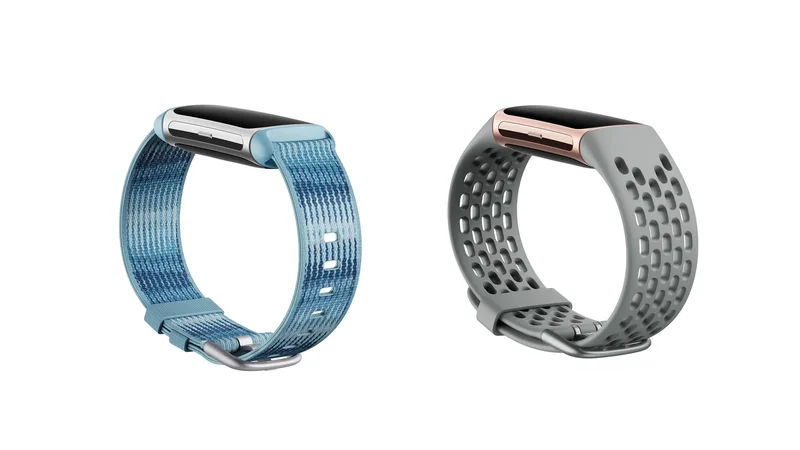
The tracker comes in three colours: Obsidian, Porcelain and Coral. Fitbit announced new accessories alongside it, including an Ocean woven band and a Hazel sport band that also fit the Charge 5. Compatibility is broad: the Charge 6 works with most phones running Android 9.0 or newer or iOS 15 or newer and requires a Google Account and internet access.
Who it is for
The Charge 6 suits people who want health, sleep and workout tracking, built-in GPS and basic smart features in a light band that lasts about a week. It is a good fit for gym-goers who want their heart rate shown on a bike or rower, and for Android users who already live in Google's apps. A smartwatch such as the Pixel Watch 3 offers a larger display and more apps, and a younger user might find the Fitbit Ace LTE a more suitable choice.
Compromises
- The screen is small, so Maps and message reading are limited compared with a watch.
- Several features need a paid subscription: Daily Readiness, YouTube Music Premium controls and some content.
- The ECG app and some Google services are not available in every country.
- Battery claims come from pre-production testing at default settings.
- Fitbit's heart-rate improvement figure applies only to specific vigorous exercises.
The Charge 6 is therefore a focused tracker rather than a mini smartwatch: it delivers accurate-seeming health data, convenient Google tools and a long battery, in exchange for a small screen and a reliance on subscriptions for the deepest insights.
Where it ranks
Compare Fitbit Charge 6 with similar devices
More from Fitbit
Frequently asked questions
When was the Fitbit Charge 6 released?
The Fitbit Charge 6 was released on 2023-09-28, according to the manufacturer’s published information.
How much does the Fitbit Charge 6 cost?
The estimated range for the Fitbit Charge 6 is $144 to $176 in US dollars, based on the launch list price. Actual prices vary by country, retailer and storage option.
What are the main specs of the Fitbit Charge 6?
Headline figures for the Fitbit Charge 6: Battery life: 7 days. The full specification table is further up this page.
Is the Fitbit Charge 6 worth buying?
That depends on your priorities. Use the editorial review on this page for our view, check the rankings above to see where the device stands on battery, display and camera, and compare it directly with similar models before you decide.