Smartwatches
COROS PACE Pro
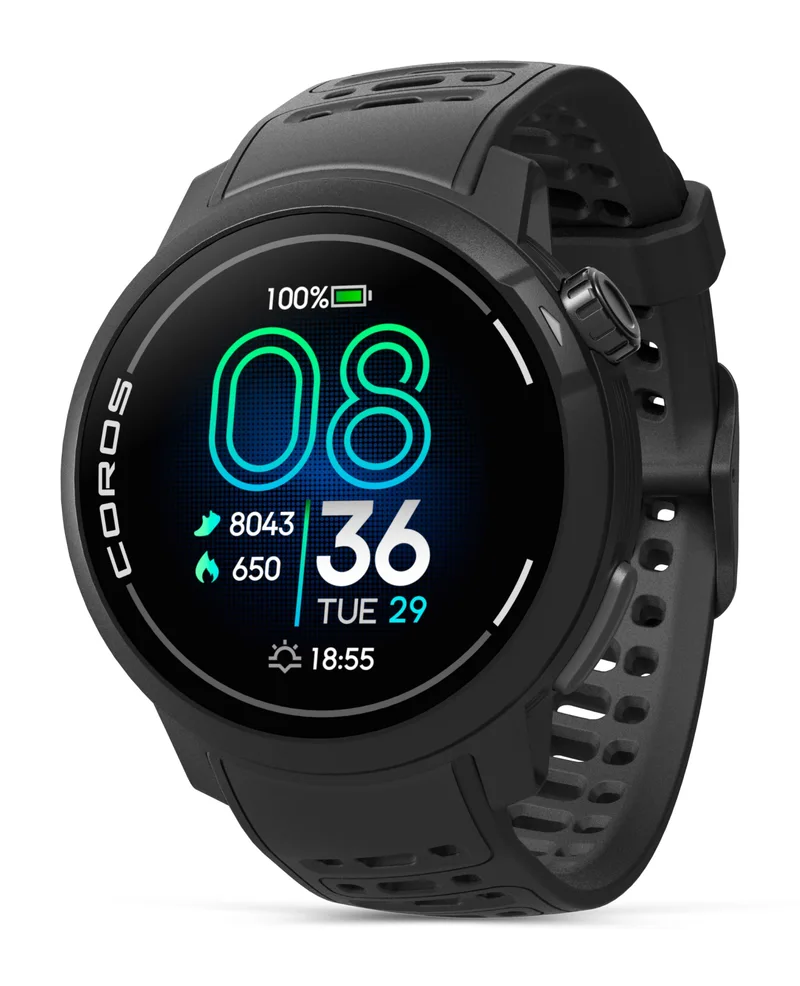
The COROS PACE Pro is a 37 g GPS sport watch with a 1.3-inch 1,500-nit AMOLED screen, dual-frequency GPS, offline maps, up to 38 GPS hours or 20 days of daily use, priced at $349 in the US.
Key figures at a glance
Gallery
Specifications
- Display
- 1.3-inch always-on AMOLED touchscreen, 416x416, up to 1,500 nits, mineral glass
- Processor
- Ambiq Apollo510 (COROS claims more than twice the processing power of the PACE 3)
- Battery
- Up to 20 days of daily use (up to 6 days with always-on display); up to 38 hours of GPS in All Systems mode (28 hours with always-on display); up to 31 hours in dual-frequency mode; under 2 hours to charge
- Body
- 46 x 46 x 12.25 mm; 37 g with nylon band, 49 g with silicone band; fiber-reinforced polymer case and bezel; 22mm quick-release bands
- Positioning
- All-satellite dual-frequency GNSS (GPS, GLONASS, Galileo, BeiDou, QZSS), downloadable global maps with turn-by-turn navigation
- Sensors
- Optical heart rate and SpO2, electrical heart rate sensor for HRV, barometric altimeter, accelerometer, gyroscope, 3D compass, thermometer
- Controls
- Touchscreen, digital dial and back button
- Memory
- 32GB internal storage, about 1,200 hours of activity memory (COROS estimate)
- Connectivity
- Bluetooth, Wi-Fi for data sync and firmware updates, offline music playback with supported Bluetooth headsets
- Water resistance
- 5 ATM (surface water activities, not for diving)
- Charging
- USB-C (cable not included)
- Colors
- Black, Grey, Blue
The COROS PACE Pro is a lightweight GPS sport watch with a 1.3-inch always-on AMOLED touchscreen. COROS announced it on 31 October 2024 from Irvine, California, and it went on sale the same day on COROS.com and at selected retailers worldwide, priced at $349 in the United States. COROS presented it as an all-new AMOLED version of its PACE series. The company pitches it at multisport athletes who want accuracy, speed and clarity without a bulky smartwatch. This page is a specification-and-information review based on the published specifications and manufacturer information, so every battery, accuracy and speed statement below is COROS's own claim and not a measurement made here. The sections cover where the watch sits in the lineup, design and display, processor and software, positioning and sensors, training features, battery, who it suits and the compromises.
Place in the lineup
COROS sells sport watches under several names, including PACE, APEX, VERTIX and NOMAD. The PACE Pro carries the PACE name and adds an AMOLED screen, more processing power and a larger display than the PACE 3, which COROS names as the model it compares it with. The company's current page for the family now lists newer models, including the COROS PACE 4, so the PACE Pro is no longer the newest PACE. If you are comparing against other running-focused watches, the Garmin Forerunner 170 and the Polar Grit X2 are relevant alternatives, and you can see the head-to-head with a premium multisport rival in the comparison with the Garmin Forerunner 970.
Design and display
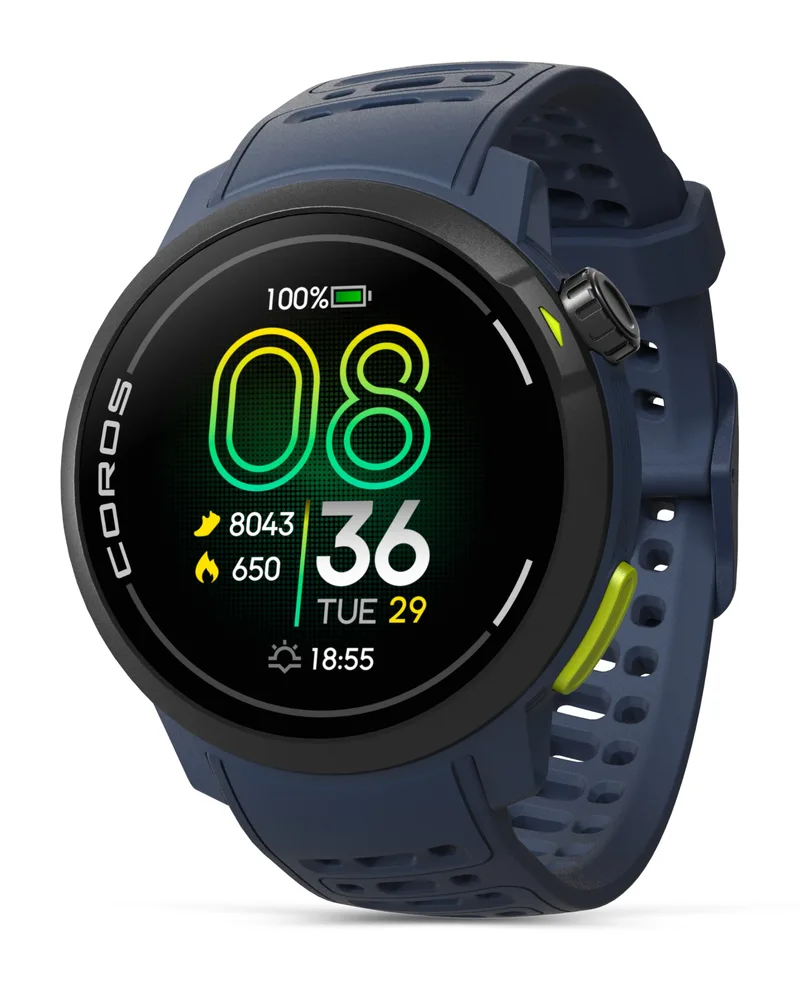
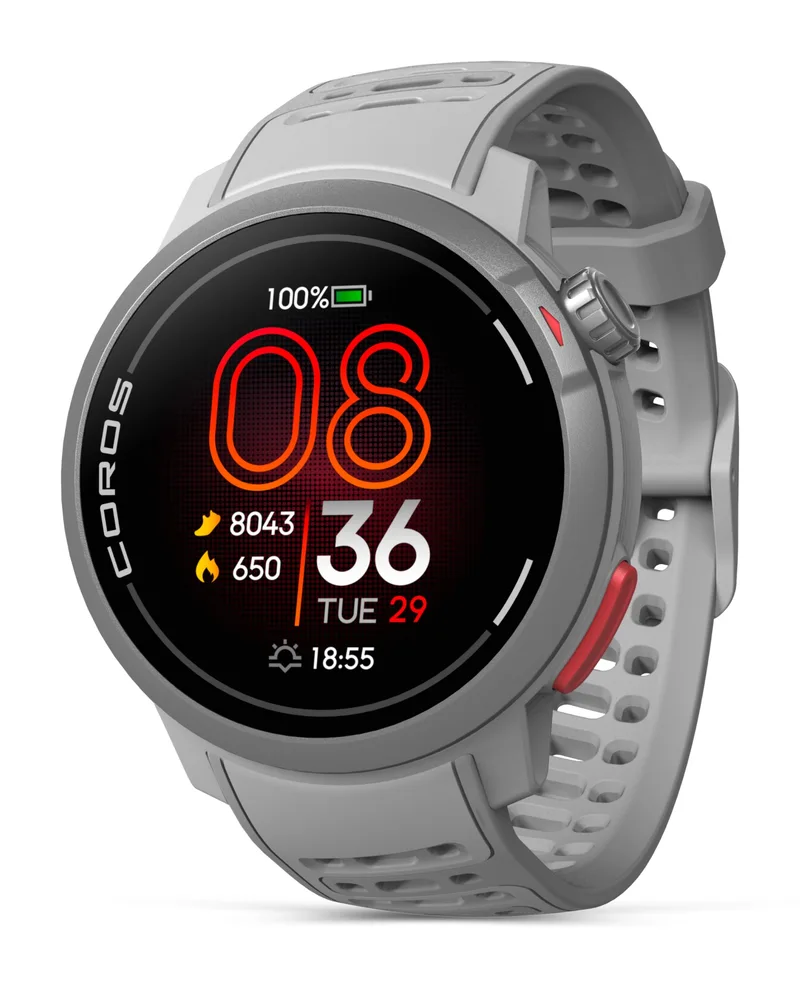
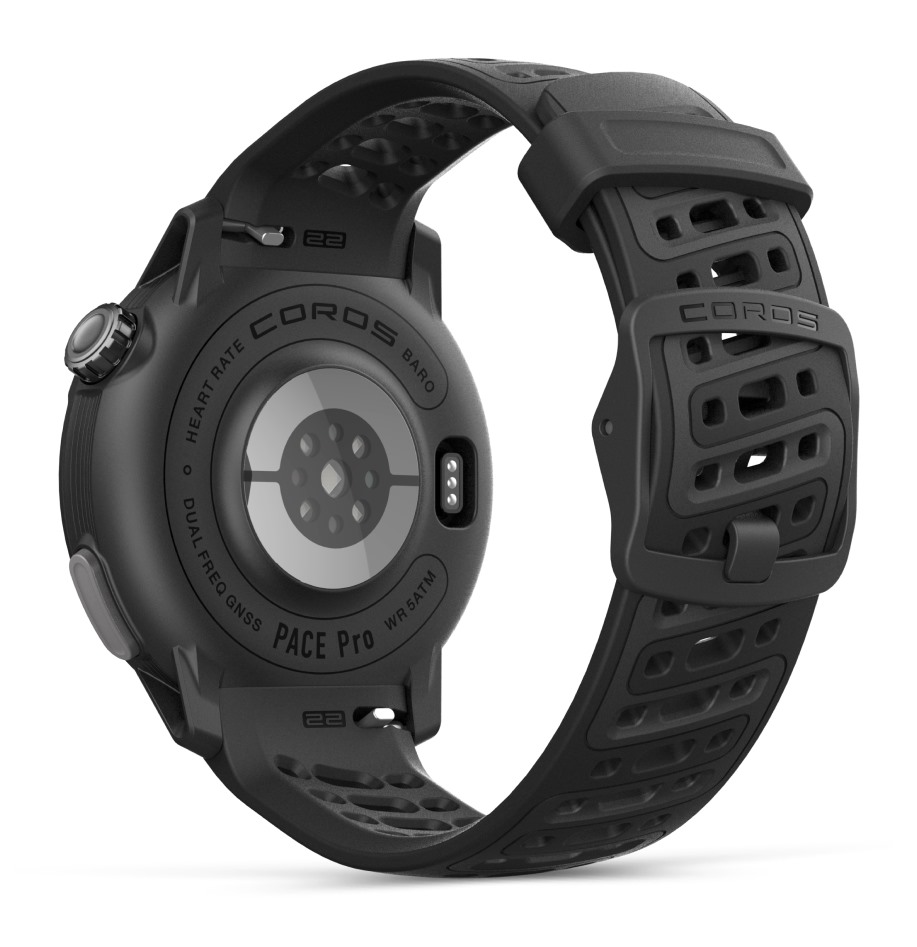
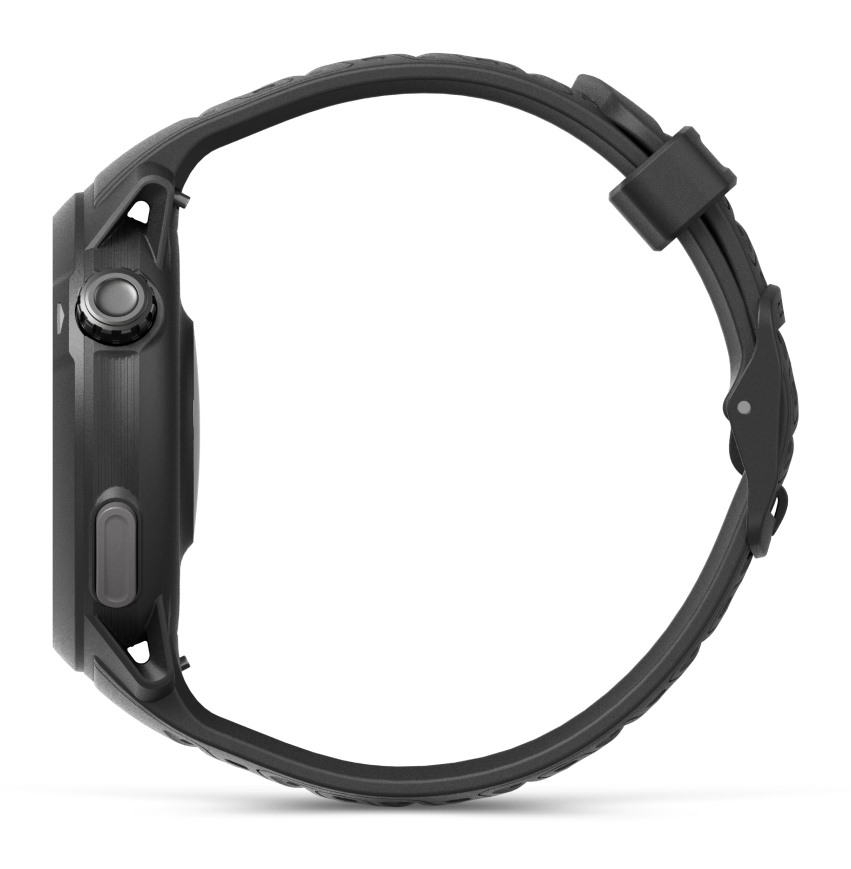
The watch measures 46 x 46 x 12.25 mm, excluding the heart rate sensor bump. The weight is 37 g with the nylon band and 49 g with the silicone band, and COROS describes it as the lightest AMOLED sports watch on the market, which is a marketing claim. The case and bezel are fibre-reinforced polymer and the screen is covered with mineral glass, a material that resists daily wear but is generally less scratch resistant than sapphire. The bands are 22mm quick-release types in silicone (fitting a 130 to 220 mm wrist) or nylon (140 to 220 mm). The watch comes in three colours, Black, Grey and Blue, and the official pictures show accent colours on the button: lime on blue and red on grey. Controls combine the touchscreen with a digital dial and a back button. COROS says the larger dial and the back button make the watch easier to use in rain or at the end of a triathlon.
The display is a 1.3-inch touch-screen AMOLED with a 416 x 416 resolution in full colour. COROS quotes a brightness of up to 1,500 nits, intended to keep the screen readable in strong daylight and on pre-dawn runs, and it offers an always-on mode. The company also says the gesture backlight is the fastest it has built, so the screen lights up quickly when you raise the wrist. A bright AMOLED screen brings a clear visual benefit over the memory-in-pixel panels used on some long-battery watches, but the always-on mode costs battery life, as the figures below show.
Processor and software
The watch uses an Ambiq Apollo510 processor, which COROS calls the most advanced chip in any of its devices. It claims more than twice the processing power of the PACE 3, triple the Wi-Fi speed and 30 times faster map and graphics rendering compared with the APEX 2 Pro. The press release also speaks of triple the zoom speed compared with predecessors. These numbers describe relative gains over COROS's own older watches and are not benchmarks that can be checked here. In practice, a faster chip matters for smooth map panning and menu response, and it should make the touchscreen feel more responsive than earlier PACE models.
The watch connects to the COROS app, which gives access to the Training Status, custom workouts, activity summaries, sleep analysis and training plans. COROS lists compatibility with third-party services including Strava, TrainingPeaks, Komoot, Nike Run Club, Apple Health and Stryd, and it supports link-ups with Insta360, GoPro and DJI action cameras for control and video overlays. The display languages cover fourteen languages including English, German, French and Spanish. Firmware updates arrive over Wi-Fi and the app, and the watch can handle call and message alerts, but the spec page does not describe a smartwatch app store, voice assistant or contactless payments, so they should not be expected.
Positioning, navigation and sensors
COROS uses a new satellite chipset with All-Systems and Dual-Frequency modes. The satellite systems listed are GPS, GLONASS, Galileo, BeiDou and QZSS. The company says the hardware configuration was also changed to improve accuracy, and it shows a comparison track from a beta test against an unnamed competitor, noting that accuracy depends on surroundings and satellite coverage. A comparison picture is not independent evidence, so treat the claim as a claim. Downloadable global maps in Landscape (with trail and street names) and Topo styles provide turn-by-turn navigation, and the navigation tools include checkpoints, back-to-start, deviation alerts, touchscreen map control and safety alerts. The watch has 32GB of internal memory, with about 1,200 hours of activity storage estimated for outdoor activities.
For sensors, the spec sheet lists an optical heart rate monitor (which may not work well over tattoos), an optical pulse oximeter, a barometric altimeter, an accelerometer, a gyroscope, a 3D compass and a thermometer, plus an electrical heart rate sensor used for HRV and wellness checks. Body temperature can be supported during training with a compatible accessory, and a COROS heart rate arm band or a COROS POD 2 can be paired for more accurate data and running-form tests.
Training features
The training tools centre on COROS's EvoLab, which covers recovery, fatigue, training load, a race predictor, VO2 max and threshold zones. Other features include Effort Pace, which is a personalised measure of true running effort, Running Fitness, activity alerts for cadence, distance, pace and heart rate, interval training, pre-planned workouts and training plans, a Virtual Pacer, Virtual Run, Altitude Mode and an Extender feature. Daily wellness features include sleep tracking with REM, daily stress, wellness check, recovery time, HRV, alarms and Find My Phone. Offline music playback is possible with supported Bluetooth headphones. Supported sport modes cover running, cycling, swimming and other activities, though the page lists categories rather than individual modes.
Battery and charging
COROS quotes up to 20 days of daily use and sleep tracking, or up to 6 days with the always-on display switched on. For GPS activity tracking the figure is up to 38 hours in All Systems mode, or 28 hours with the always-on display. In dual-frequency mode the figures are 31 hours, or 24 hours with always-on display, and playing offline music during All Systems tracking cuts the figure to 13 hours, or 11 hours with always-on display. COROS adds that results depend on usage such as music, backlight and navigation, and that lithium-ion batteries age. Charging takes under two hours, and the watch uses a USB-C connection with a keychain adapter, though the cable is not included. The battery capacity in mAh is not published. These battery numbers are generous for an AMOLED watch, but they apply to best-case settings, and a runner who uses dual-frequency GPS and always-on display every day should expect to charge much more often than the headline suggests.
Who it is for
- Runners, triathletes and cyclists who want a very light watch with a bright, colourful screen.
- Users who value maps, navigation and a long list of training metrics without a smartwatch app ecosystem.
- Athletes who like physical controls and a digital dial.
- Buyers who want 32GB for maps and offline music.
Compromises
- Mineral glass is less scratch resistant than sapphire.
- The always-on display cuts battery life sharply, from 20 days to 6 days of daily use.
- There is no smartwatch app store, and the spec page lists no contactless payments.
- Many speed and accuracy claims compare the watch with COROS's own older models or an unnamed competitor.
- The USB-C charging cable is not included.
- It is a previous-generation PACE model now that newer ones have appeared.
In short, the COROS PACE Pro is a light, fast and bright sport watch for people who want training tools and navigation more than smart features. It is best suited to runners and multisport athletes. For a broader view of how watches are ranked by their published specifications, see the rankings page.
Where it ranks
Compare COROS PACE Pro with similar devices
More from COROS
Frequently asked questions
When was the COROS PACE Pro released?
The COROS PACE Pro was released on 2024-10-31, according to the manufacturer’s published information.
How much does the COROS PACE Pro cost?
The estimated range for the COROS PACE Pro is $314 to $384 in US dollars, based on the launch list price. Actual prices vary by country, retailer and storage option.
What are the main specs of the COROS PACE Pro?
Headline figures for the COROS PACE Pro: Battery life: 20 days. The full specification table is further up this page.
Is the COROS PACE Pro worth buying?
That depends on your priorities. Use the editorial review on this page for our view, check the rankings above to see where the device stands on battery, display and camera, and compare it directly with similar models before you decide.