Smartwatches
COROS VERTIX 2S
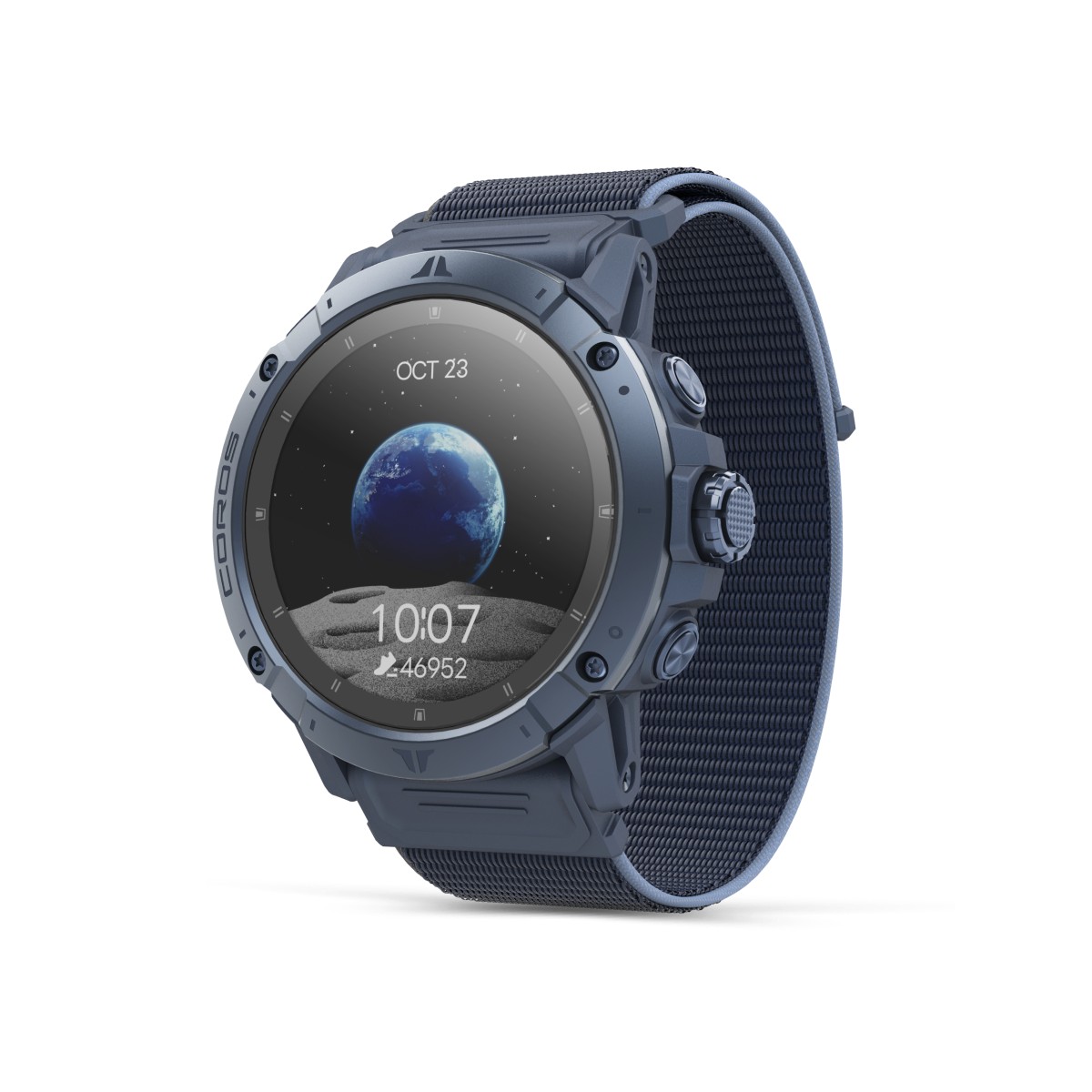
The COROS VERTIX 2S is a large titanium-bezel GPS adventure watch with a sapphire touchscreen, dual-frequency GPS, offline maps, up to 36 days of daily use or 118 hours of GPS, and a US price of $699.
Key figures at a glance
Gallery
Specifications
- Display
- 1.4-inch always-on touchscreen memory LCD, 280 x 280, 64 colors, sapphire glass
- Body
- 50.3 x 50.3 x 16 mm; 87 g with silicone band, 70 g with nylon band; Grade 5 titanium alloy bezel with PVD coating; 26 mm quick-fit bands (nylon and silicone both included); 10 ATM water resistance (surface water activities, not diving)
- Battery
- Up to 36 days of daily use; up to 118 hours of full GPS; up to 73 hours in All Systems GPS mode; up to 43 hours in All Systems dual-frequency mode (up to 22 hours with offline music playing); under 2 hours to charge
- Positioning
- All-satellite dual-frequency GNSS chipset; GPS, GLONASS, Galileo, BeiDou, QZSS
- Storage
- 32 GB (about 1,200 hours of outdoor activity data, plus offline maps and music)
- Sensors
- Optical heart rate monitor, optical pulse oximeter, electrical heart rate sensor for HRV and wellness checks, barometric altimeter, accelerometer, gyroscope, 3D compass, thermometer
- Navigation
- Downloadable global offline maps (Landscape and Topo layers), turn-by-turn directions, checkpoints, Back-To-Start, deviation alert, touchscreen map control, safety alerts
- Controls
- Touchscreen, tactile buttons, a digital dial and a dedicated backlight button
- Operating temperature
- -30 to 50 C (-22 to 122 F)
- Connectivity
- Bluetooth, Wi-Fi and the COROS app for data sync and firmware updates; offline music playback with supported Bluetooth headsets
- Sports
- Climbing, snow sports with auto ski-touring transition, ultra-running, mountaineering with storm alert and altitude mode, plus Effort Pace, EvoLab, training plans and Virtual Pacer
The COROS VERTIX 2S is a large, titanium-bezel GPS adventure watch built around two ideas: very long battery life and a navigation toolkit aimed at climbers, mountaineers and ultra-distance runners. COROS describes it as the latest generation of its VERTIX line, with an all-new dual-frequency satellite system, a sapphire touchscreen and a claimed 36 days of regular use or 118 hours of continuous GPS. The US web store of COROS lists the watch at $699. COROS's own pages that this review could check do not state a launch date, so none is given here. This page is a specification-and-information review based on the published specifications and manufacturer information, which means every battery, accuracy and durability statement is a COROS claim and not a measurement made here. The sections below cover where the watch sits in the range, design and display, navigation and positioning, sensors and training, battery, who it is for and the compromises.
Place in the lineup
COROS lists several GPS watch families, including PACE, APEX and VERTIX, and the VERTIX name is the one COROS attaches to its endurance and mountain-oriented watch. The VERTIX 2S is the model of that line described here. It is far heavier and thicker than a PACE watch, but it offers a longer battery, a mountain-oriented feature list and a full titanium bezel. Within the database you can compare it with the lighter COROS PACE Pro and the entry-level COROS PACE 4, both of which prioritise weight and an AMOLED screen over battery life and rugged hardware. A comparable watch from another brand is the Garmin fenix 8, and the comparison page COROS VERTIX 2S vs Garmin fenix 8 puts the published figures side by side.
Design, build and display
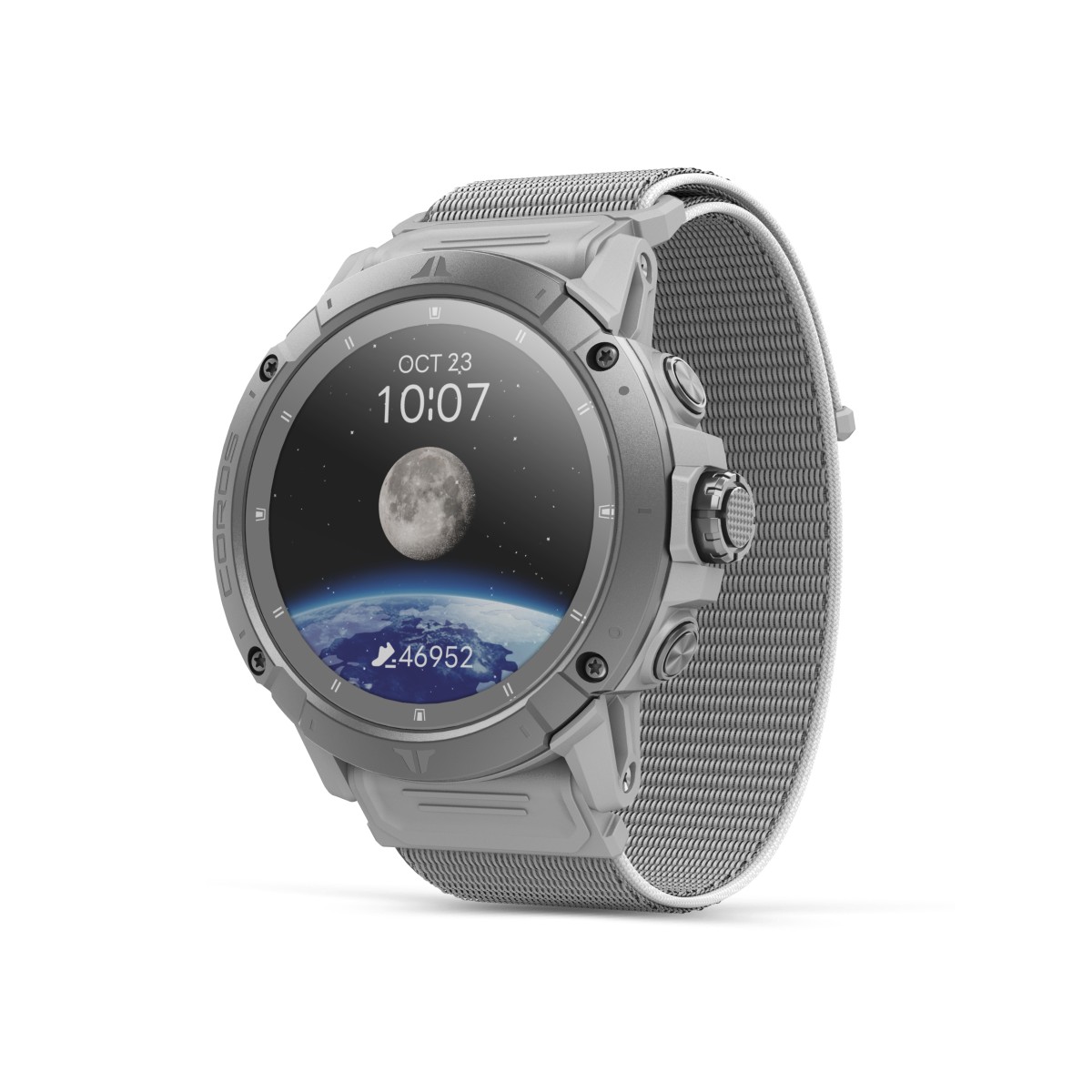
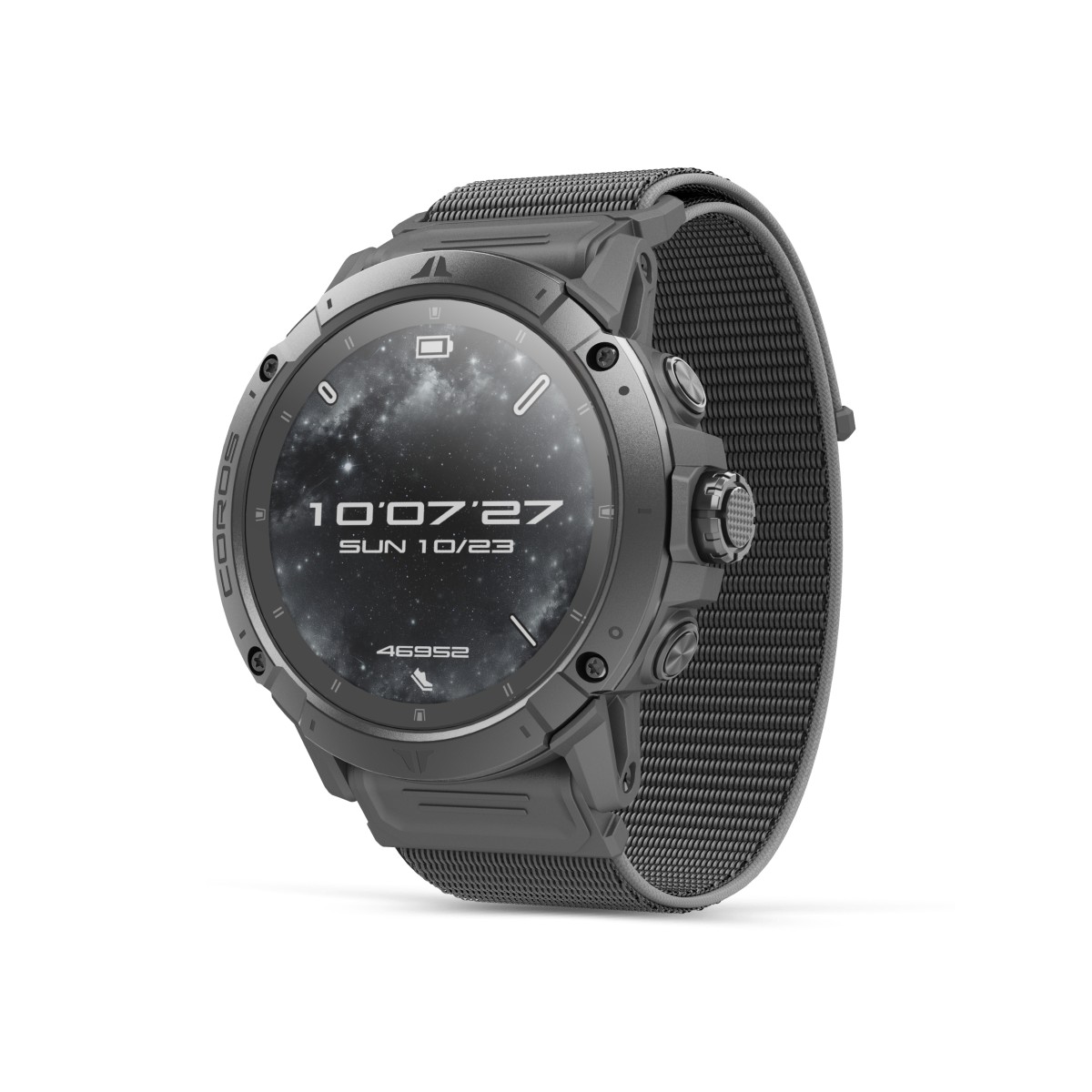
The case measures 50.3 x 50.3 x 16 mm. COROS lists 87 g with the silicone band and 70 g with the nylon band, and both bands come in the box, which is useful because the lighter nylon strap changes the feel considerably. The bezel is Grade 5 titanium alloy with a PVD coating, the screen is sapphire glass, and the bands use a 26 mm quick-fit design, so other 26 mm COROS accessory bands can be fitted. The operating temperature range is minus 30 to plus 50 degrees Celsius and the watch is rated to 10 ATM. COROS adds that the rating is meant for surface water activities and not for diving. Controls consist of the touchscreen, tactile buttons, an enlarged digital dial and a dedicated backlight button; COROS says the layout is designed to be usable with thick gloves.
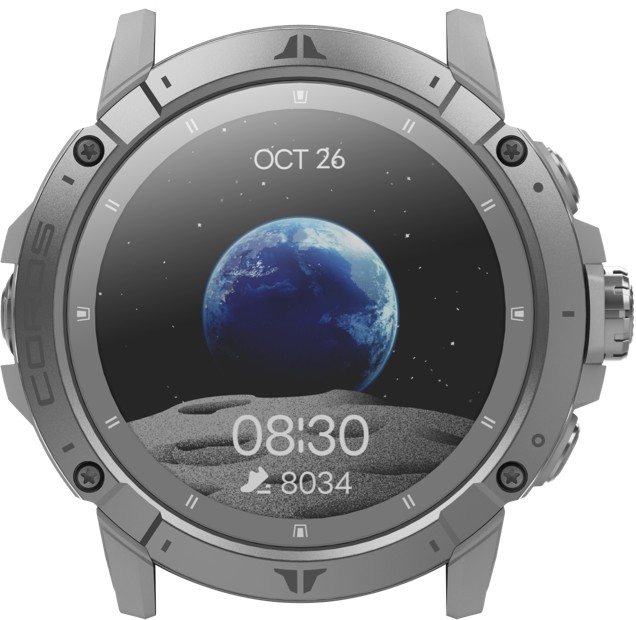
The display is a 1.4-inch always-on memory LCD with 280 x 280 pixels and 64 colours. That specification matters: it is not an AMOLED panel, so colours are muted compared with the PACE Pro or a typical smartwatch, but a memory LCD can stay on continuously at very low power use and is easy to read in direct sunlight. That trade-off is the reason the long battery figures are possible. Anyone who wants a vivid screen above all else should look at the AMOLED models in the range instead.
Positioning and navigation
The positioning hardware is an all-satellite, dual-frequency GNSS chipset that supports GPS, GLONASS, Galileo, BeiDou and QZSS. COROS markets dual-frequency tracking as an advantage in canyons, narrow valleys and on cliff faces, and says its GPS algorithms have been tuned and tested for long multi-pitch climbs. Whether the accuracy gain is large in practice cannot be judged from specifications alone.
For navigation the watch offers downloadable global offline maps in two layers, Landscape and Topo, with turn-by-turn directions, an elevation profile, checkpoints, Back-To-Start, deviation alerts and touchscreen map control. COROS also mentions Navigation Mirroring, which lets you follow complex routes planned on your phone from the watch. Internal storage is 32 GB, which COROS estimates is enough for about 1,200 hours of outdoor activity data, in addition to maps and music.
Sensors, safety and training
The sensor set includes a latest-generation optical heart rate monitor, an optical pulse oximeter, an electrical heart rate sensor used for HRV and wellness checks, a barometric altimeter, an accelerometer, a gyroscope, a 3D compass and a thermometer. For mountain use COROS lists altitude mode, which regularly evaluates SpO2 and fitness at high altitude, storm alerts, nutrition alerts, sunrise and sunset times and a safety alert function. Climbing modes support rock, ice and mixed grades, automatic indoor pitch detection and flash, redpoint and onsight logging, and the snow modes include automatic ski-touring transition.
The training layer is the familiar COROS system: Effort Pace for running, EvoLab metrics such as recovery, training load, VO2 max and race predictor, training plans, activity alerts, Virtual Pacer, running fitness and sleep tracking with REM. The watch can control GoPro, DJI and Insta360 cameras, play offline music through supported Bluetooth headphones and sync with apps such as Strava, Nike Run Club, Apple Health and Health Connect. The second-generation carabiner lets the watch be carried off the wrist, and COROS accessories such as the heart rate monitor and the POD 2 can add running form tests and external temperature readings.
Battery and charging
Battery life is the headline. COROS quotes up to 36 days of regular use and up to 118 hours of full GPS. In All Systems dual-frequency mode, which is the more accurate setting, the figures are up to 43 hours, or up to 22 hours with offline music playing, while the All Systems mode without dual-frequency is listed at up to 73 hours. Charging takes under two hours. COROS notes that all battery claims depend on usage such as music, backlight and navigation, so real results will vary. Remember too that the best figures use the least demanding GPS setting.
Who it is for
The VERTIX 2S suits people who spend long periods away from a charger: alpine climbers, ski tourers, multi-day hikers and ultra-runners. It also suits those who like a large, tough watch with physical controls and a titanium bezel. At $699 it is a premium purchase, and it is easier to justify for someone who will actually use the offline maps and the multi-day battery than for a runner who mostly wants a light watch for road training, where the PACE Pro or PACE 4 would be the more comfortable fit.
Compromises to consider
- Size and weight: 16 mm thick and 70 to 87 g depending on the band, it is bulky on slim wrists and in bed.
- Display: a 64-colour memory LCD is readable and efficient but looks dull next to AMOLED watches.
- Price: $699 on COROS's US store.
- Battery in demanding modes: the 43-hour dual-frequency figure and the 22-hour figure with music are far below the headline numbers.
- Dive use: the 10 ATM rating is explicitly not for diving.
Overall, the VERTIX 2S is a specialist tool. Its strengths are battery life, sapphire and titanium durability and mountain features, and its costs are weight, a modest screen and a high price.
Where it ranks
Compare COROS VERTIX 2S with similar devices
More from COROS
Frequently asked questions
When was the COROS VERTIX 2S released?
The manufacturer’s release date for the COROS VERTIX 2S is not stated in the information we have.
What are the main specs of the COROS VERTIX 2S?
Headline figures for the COROS VERTIX 2S: Battery life: 36 days. The full specification table is further up this page.
Is the COROS VERTIX 2S worth buying?
That depends on your priorities. Use the editorial review on this page for our view, check the rankings above to see where the device stands on battery, display and camera, and compare it directly with similar models before you decide.