Google Pixel Watch 2 Review: Fitbit’s Best Ideas, Finally on Wear OS
8.0/10
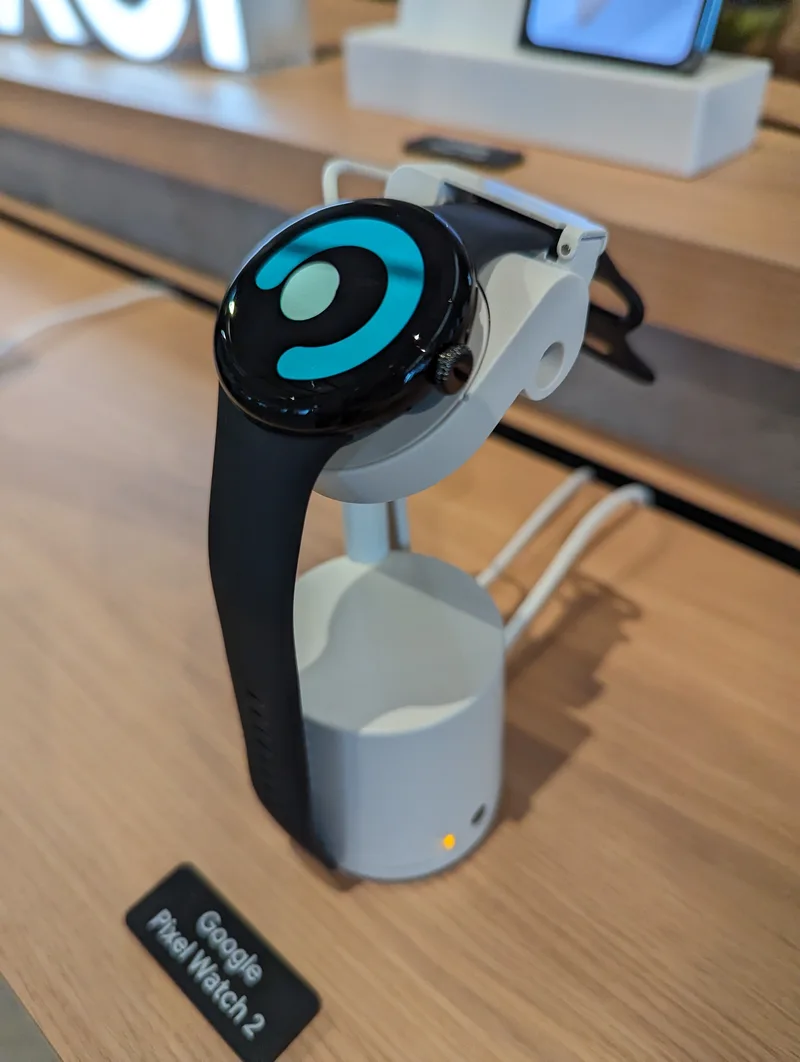
The Pixel Watch 2 is the clearest sign yet that Google’s 2019 acquisition of Fitbit has actually paid off in product terms: this is the first Pixel Watch to run Fitbit’s health-tracking algorithms and Fitbit’s companion app natively, rather than the more limited first-generation Pixel Watch software. The result is a Wear OS smartwatch with genuinely competitive fitness tracking, something the original Pixel Watch notably lacked at launch.
The 41mm case with its distinctive domed circular display design is more compact and comfortable for smaller wrists than Samsung’s Watch6, and the Snapdragon SW5100 chipset — a dedicated wearable-specific chip rather than a repurposed phone processor — brings a meaningful efficiency improvement over the original Pixel Watch, translating into noticeably better real-world battery life.
Fitbit integration
Multi-path heart rate sensing, skin temperature tracking, and an electrodermal activity (EDA) sensor for stress detection all feed into Fitbit’s app, which provides some of the most approachable and genuinely actionable health insights of any wearable platform — a Daily Readiness Score that adjusts workout recommendations based on sleep and recovery, and a Stress Management score derived from EDA and heart rate variability data.
Software and Google integration
As a Wear OS device, the Pixel Watch 2 gets full access to Google’s app ecosystem: Google Maps with turn-by-turn navigation on the wrist, Google Wallet for tap-to-pay, and (unlike the Galaxy Watch6) no phone-brand feature restrictions — every feature works identically whether paired with a Pixel or any other Android phone.
Battery
The 306 mAh battery yields roughly a full day of use with always-on display active, similar to the Galaxy Watch6’s real-world endurance, and both trail dedicated fitness watches that sacrifice smartwatch features for multi-day battery life.
How it compares
Against the Galaxy Watch6, the Pixel Watch 2 offers full feature parity regardless of which Android phone you own, while the Watch6 offers a deeper sensor suite specifically for Samsung phone owners. Against Apple’s Watch Series 10, the choice is entirely dictated by phone platform, as with any Wear OS versus watchOS comparison.
Design and comfort
The domed Gorilla Glass 5 crystal over the display gives the Pixel Watch 2 one of the more distinctive silhouettes among current smartwatches, avoiding the flat-rectangle look shared by most Wear OS and Apple Watch competitors. The proprietary band attachment mechanism, unchanged from the original Pixel Watch, does limit third-party band compatibility compared to Samsung’s more standard lug system, though Google and third-party accessory makers have expanded official band options considerably since the original Pixel Watch’s more limited launch selection.
Pricing and positioning
At $350 at launch, the Pixel Watch 2 sits close to the Apple Watch Series 10’s base pricing and above the Galaxy Watch6’s starting price, a position that reflects Google positioning it as a premium option rather than a budget Wear OS alternative. Google’s own trade-in program and periodic Google Store discounts can meaningfully reduce the effective price, particularly when bundled with a new Pixel phone purchase.
Common complaints
The most frequent complaint mirrors the Galaxy Watch6’s: battery life requiring nightly charging for most users with always-on display enabled, which conflicts with using the watch for overnight sleep tracking unless charging habits shift to a different part of the day, commonly a short top-up during morning routines. A smaller complaint involves the crown’s haptic feedback feeling less precise than Apple’s Digital Crown, something reviewers have noted across both Pixel Watch generations without much improvement.
Fitbit Premium and the subscription question
The Pixel Watch 2 includes six months of Fitbit Premium at purchase, a subscription that unlocks deeper sleep analysis, guided workout programs, and more detailed health metric breakdowns beyond what the free tier offers. After the trial period, continuing to access those deeper insights requires an ongoing subscription fee, an important detail some buyers miss when comparing the "free" health tracking on Samsung and Apple’s watches against Google’s partially subscription-gated approach.
Safety features
Both fall detection and crash detection (using the accelerometer to identify likely car accidents and automatically alert emergency contacts) are built in, features that were previously exclusive to the original Pixel Watch’s successor generation rather than available at launch on the first model, reflecting Google’s rapid iteration on safety-focused features across just two watch generations.
Google Assistant and voice features
Because the Pixel Watch 2 runs a genuinely on-device version of Google Assistant rather than relying entirely on cloud processing, voice commands for setting timers, checking weather, or controlling smart home devices respond noticeably faster than the cloud-dependent voice assistants on some other Wear OS watches, a subtle but frequently noticed advantage in daily use. Smart home integration with Google Home devices is also more seamless here than on the Galaxy Watch6, which relies on Samsung SmartThings or Google Home depending on setup.
Materials and comfort
The recycled aluminum case (Google has emphasized sustainability in its materials sourcing since the original Pixel Watch) keeps the watch genuinely lightweight at just over 30 grams without the band, making it comfortable for extended wear including overnight sleep tracking, an important detail given how central sleep data is to the Fitbit health scoring system built into the watch.
Who should look elsewhere
Samsung phone owners specifically will generally get more out of the Galaxy Watch6’s deeper Samsung-specific sensor suite, and anyone unwilling to pay for Fitbit Premium after the included trial should weigh whether the free-tier health features still meet their needs before buying. Buyers wanting the longest possible battery life on a smartwatch should also look outside the Wear OS ecosystem entirely toward dedicated multi-day fitness watches, since neither Pixel Watch generation has meaningfully closed that gap.
Verdict
The Pixel Watch 2 is the Wear OS smartwatch to buy if you want Fitbit-grade health tracking and full feature parity without being tied to Samsung phone hardware, and its distinctive design and mature Fitbit app integration make it a genuinely strong second-generation product, though the Fitbit Premium subscription wall is worth factoring into the true long-term cost. Score: 8.0/10.
Related Reading
See our resale value guide for how smartwatches hold up financially compared to phones, and our Wear OS vs. watchOS ecosystem guide if you are still deciding on a platform.