Phones
Nokia C1 2nd Edition
Nokia C1 2nd Edition: a small 3G-only Android Go phone with a 5.45-inch HD+ screen, quad-core chip, 1GB of RAM, 16GB of storage and a removable 2,500 mAh battery.
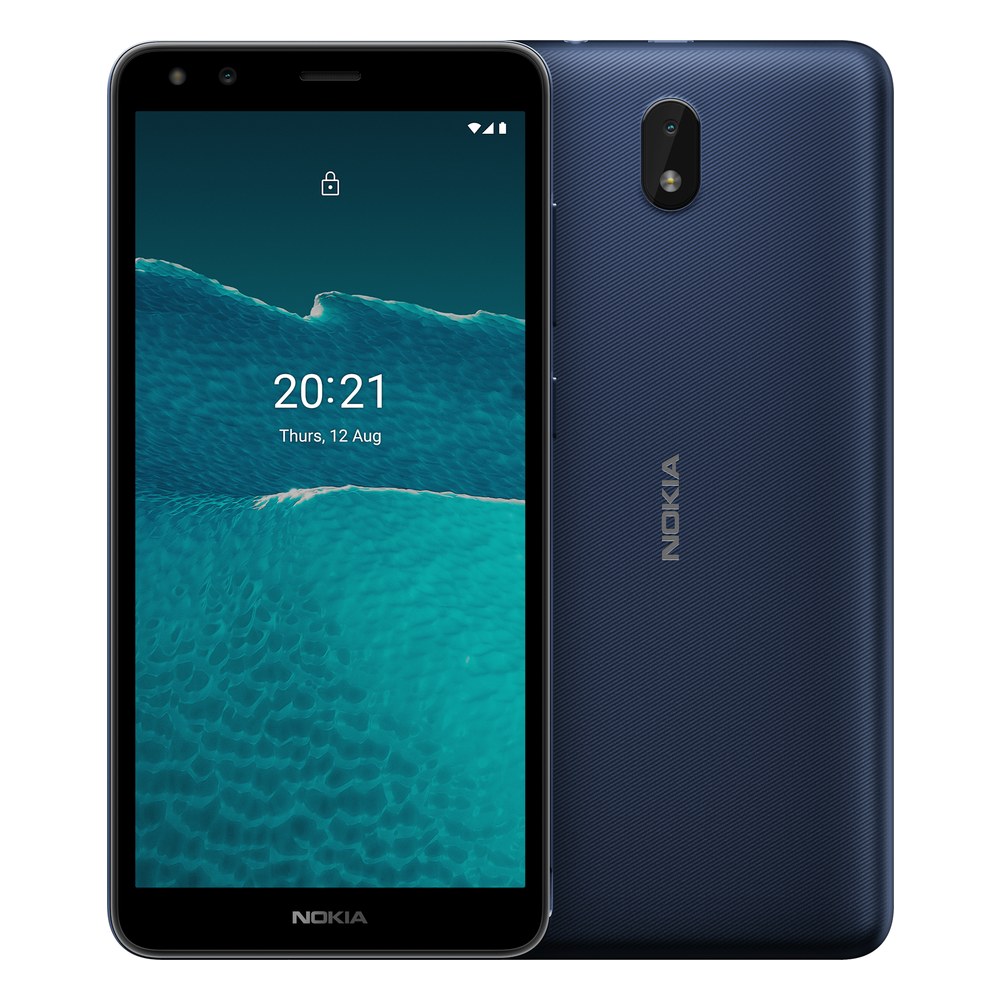
Key figures at a glance
Nokia C1 2nd Edition display
The display measures 5.45", below the median of the 367 phones we list with this figure (6.7"). The resolution is 1,440 × 720 pixels.
- Display
- 5.45" TFT LCD, HD+ (1440x720), 18:9
Nokia C1 2nd Edition performance and hardware
The chipset named in the spec sheet is Unisoc SC7731E. The largest RAM option is 1 GB, below the median of the 349 phones we list with this figure (12 GB). Storage goes up to 16 GB, below the median of the 363 phones we list with this figure (512 GB).
- Chipset
- Unisoc SC7731E, quad-core 1.3GHz Cortex-A7, Mali-400 MP2
- RAM
- 1GB
- Storage
- 16GB (eMMC 5.1), microSDXC
Nokia C1 2nd Edition camera
The main rear camera is listed at 5 MP, below the median of the 372 phones we list with this figure (50 MP). The spec sheet lists a single rear camera. The front camera is listed at 5 MP, below the median of the 359 phones we list with this figure (16 MP).
- Rear Camera
- 5MP, LED flash, 720p@30fps video
- Front Camera
- 5MP with LED flash, 720p@30fps video
Nokia C1 2nd Edition battery and charging
The battery capacity is 2,500 mAh, below the median of the 355 phones we list with this figure (5,050 mAh).
- Battery
- 2,500 mAh (Li-Ion, removable)
Nokia C1 2nd Edition design and build
The weight is listed as 154 g, below the median of the 319 phones we list with this figure (196 g). The body is 9.3 mm thick, above the median of the 280 phones we list with this figure (8.2 mm).
- Dimensions
- 148 x 71.8 x 9.3 mm, 154 g
- Colors
- Blue, Purple
Nokia C1 2nd Edition: more specs
- Connectivity
- 3G (HSPA, no 4G), dual nano SIM, Wi-Fi 802.11 b/g/n, Bluetooth 4.2, GPS, FM radio, microUSB 2.0, 3.5 mm jack, no NFC
- OS
- Android 11 (Go edition)
Every figure on this page comes from the published spec sheet; PhonesVS has not run its own lab tests on this device. Medians are calculated across the phones in our catalogue that list the figure in question.
Strengths and weak spots on paper
Strengths are figures that fewer than one in five phones in our catalogue beat; weak spots are figures that fewer than one in five fall below. Based on the spec sheet only, not on tests of our own.
Strengths
- Weight: 154 g, lighter than 99% of the 319 phones with this figure listed
Weak spots
- RAM (max): 1 GB, lower than 99% of the 349 phones with this figure listed
- Storage (max): 16 GB, lower than 99% of the 363 phones with this figure listed
- Main camera: 5 MP, lower than 98% of the 372 phones with this figure listed
- Front camera: 5 MP, lower than 93% of the 359 phones with this figure listed
- Battery capacity: 2,500 mAh, lower than 99% of the 355 phones with this figure listed
- Thickness: 9.3 mm, thicker than 94% of the 280 phones with this figure listed
The Nokia C1 2nd Edition was announced on 5 July 2021 and released on 27 August 2021. It is about as elementary as an Android smartphone gets: a 5.45-inch display, a quad-core Unisoc SC7731E processor, 1GB of RAM, 16GB of storage and Android 11 in the Go edition. Two things define it more than anything else. It is small and light, at 154 grams, and it connects to 3G networks only, since the data lists GSM and HSPA without 4G LTE. This page explains what that means in practice and reports what the published specification contains.
Relation to other models
The C1 2nd Edition shares its dimensions of 148 by 71.8 by 9.3 millimetres with the Nokia C01 Plus, launched two months earlier. The C01 Plus looks almost the same but has an octa-core processor, 4G, a larger battery and versions with 2GB of RAM, which makes it the considerably more capable phone. The differences are listed on our Nokia C1 2nd Edition vs Nokia C01 Plus page. The SC7731E chip is also found in the larger Nokia C10, another 3G-only model.
The 3G question
A phone without 4G depends on 3G for mobile data. In many countries operators have shut down 3G or are in the process of doing so, in order to free frequencies for newer technologies. Where that has happened, this phone can use only 2G for calls and text messages, with data speeds too low for most apps, and in places where 2G has also been withdrawn it may not connect to the mobile network at all. Anyone considering the C1 2nd Edition should first confirm that their operator still runs a 3G network on the 850, 900, 1900 or 2100 MHz bands listed for it. Over Wi-Fi the phone works independently of this.
Design
At 154 grams and less than 15 centimetres in height, the phone is very easy to carry and to operate with one hand. The front is glass, and the back and frame are plastic, with a removable back cover over the battery. The data lists no water or dust protection. It was sold in Blue and Purple. Two nano SIM cards and a microSDXC card are supported; whether the card has its own slot is not stated. There is no fingerprint reader.
Display
The 5.45-inch TFT LCD has a resolution of 720 by 1440 pixels in an 18:9 format, which gives a dense 295 pixels per inch. Sharpness is therefore not a weakness. The data describes the panel as TFT, without the IPS designation, so viewing angles and colour stability may be less good than on IPS screens, though the specification does not go into detail. About 72 percent of the front is screen. Brightness and protective glass are not specified.
Performance and memory
The Unisoc SC7731E has four Cortex-A7 cores running at 1.3GHz and a Mali-400 MP2 graphics unit. Both are designs from the early years of Android phones, and they are capable of only the lightest workloads by current standards. Combined with 1GB of RAM, the result is a phone that performs single, simple tasks: a phone call, a text conversation, a song, a basic web page. Each app needs time to start, and the system closes background apps constantly to free memory.
There is one memory version, with 1GB of RAM and 16GB of eMMC 5.1 storage. A substantial part of those 16GB is taken by the system, so only a few additional apps can be installed, and they should be chosen carefully. Lighter "Go" or "Lite" versions of popular apps are the best fit. A microSDXC card is practically a necessity for photos and music.
Cameras
The rear and front cameras each have a 5MP sensor and an LED flash, and each records 720p video at 30 frames per second. Autofocus is not listed. The flash on the front is helpful for video calls in dark surroundings. Picture quality is simple and adequate only for casual use in good light, such as sending a snapshot or recording a note.
Battery
The battery is a 2,500 mAh lithium-ion pack. That is a small capacity, but the phone's small screen and slow processor consume little, so a day of light use is achievable. Intensive use will empty it more quickly. The charging power is not specified, and fast or wireless charging are not mentioned.
The battery can be removed. This makes replacement easy and inexpensive and allows a charged spare to be carried, which fits the character of a phone meant for the simplest and most durable kind of service.
Connectivity and audio
Apart from 2G and 3G mobile networks, with HSPA download speeds of up to 21.1 Mbps according to the data, the phone offers Wi-Fi 802.11 b/g/n on 2.4GHz, Bluetooth 4.2 with A2DP and LE, and GPS. NFC is not present. A microUSB 2.0 port handles charging and data. A 3.5 mm headphone jack and an FM radio are included, and the sensors are an accelerometer and a proximity sensor.
Software
Android 11 (Go edition) is installed. This lightweight Android variant is the only sensible choice for 1GB of RAM, and it comes with a reduced set of preinstalled apps. No later version is mentioned in our data. The software is several years old, so it is advisable to check the security patch level and to refrain from using the phone for banking or other sensitive accounts.
Who it suits
The Nokia C1 2nd Edition makes sense only in specific circumstances: as a very inexpensive phone for calls and messages where 3G or 2G service remains available, as a small Wi-Fi device for messaging at home, or as an emergency spare. For nearly everyone else, a 4G phone with at least 2GB of RAM is a far better investment and need not cost much more. Our rankings and the phone catalogue are good places to look for one.
Trade-offs
The list of limits is long: no 4G, a very slow quad-core chip, 1GB of RAM, 16GB of storage, 5MP cameras with 720p video, a 2,500 mAh battery with unspecified charging power, a microUSB port, no fingerprint reader, Bluetooth 4.2, 2.4GHz-only Wi-Fi, no NFC, no listed water protection and an old Android version. Availability depended on the market, and we publish no price because we lack a consistent reference.
Where it ranks
Positions of the Nokia C1 2nd Edition in our spec-sheet rankings. Each card opens the full list.
Devices similar to the Nokia C1 2nd Edition
Same category, picked by estimated launch price (within 25%) or release date (within 12 months) and sorted by how close the spec-sheet figures are.
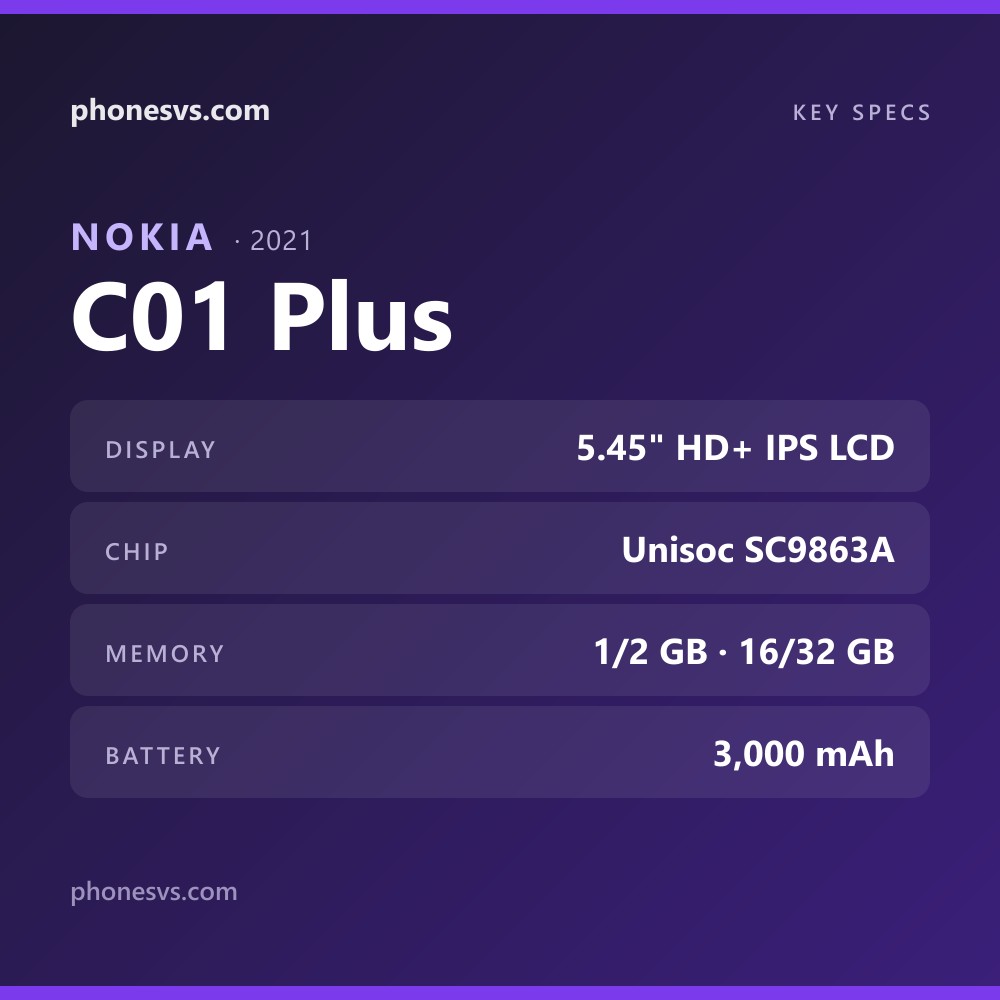
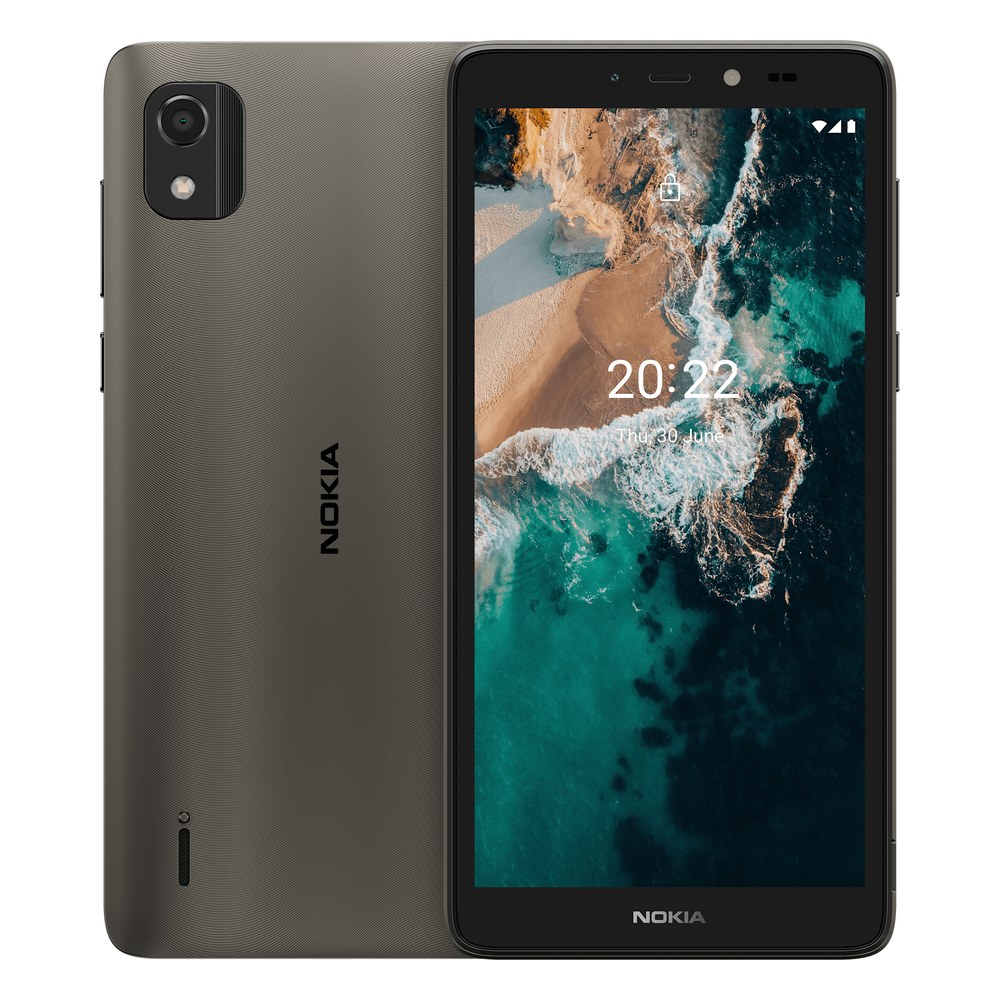
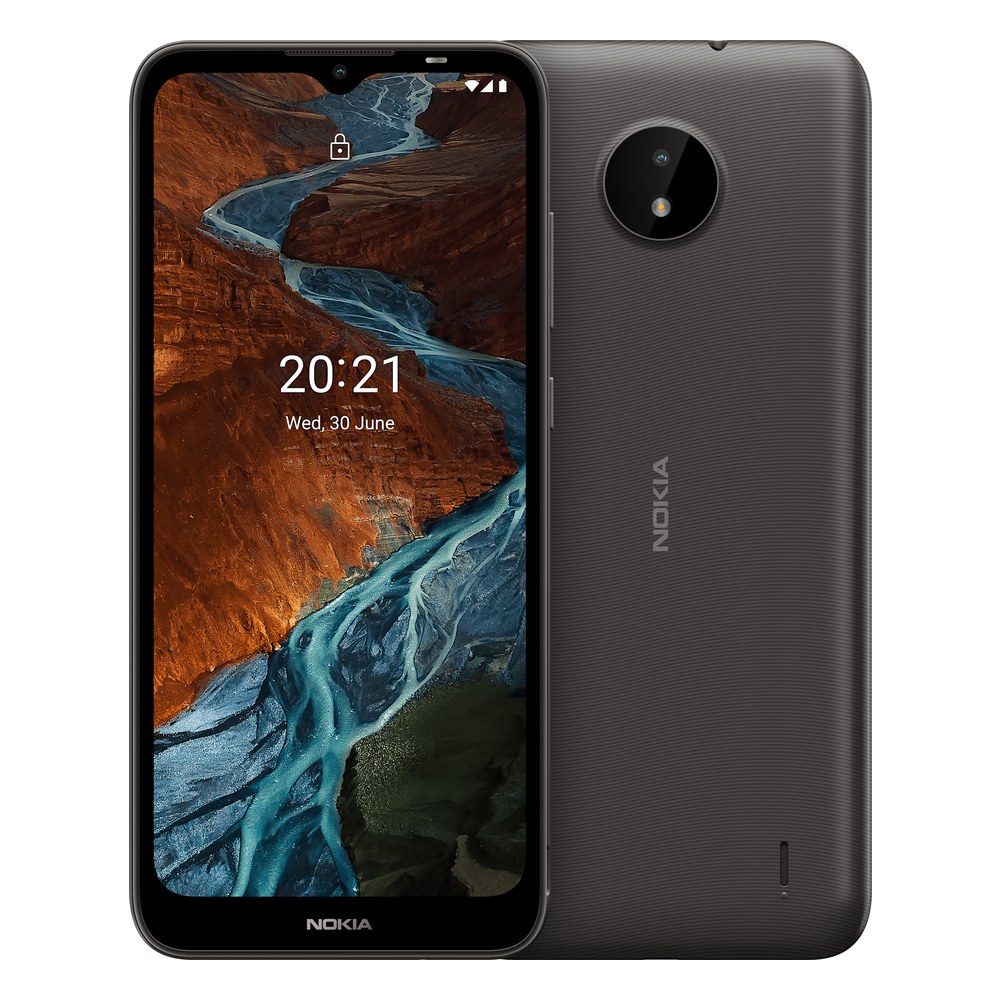
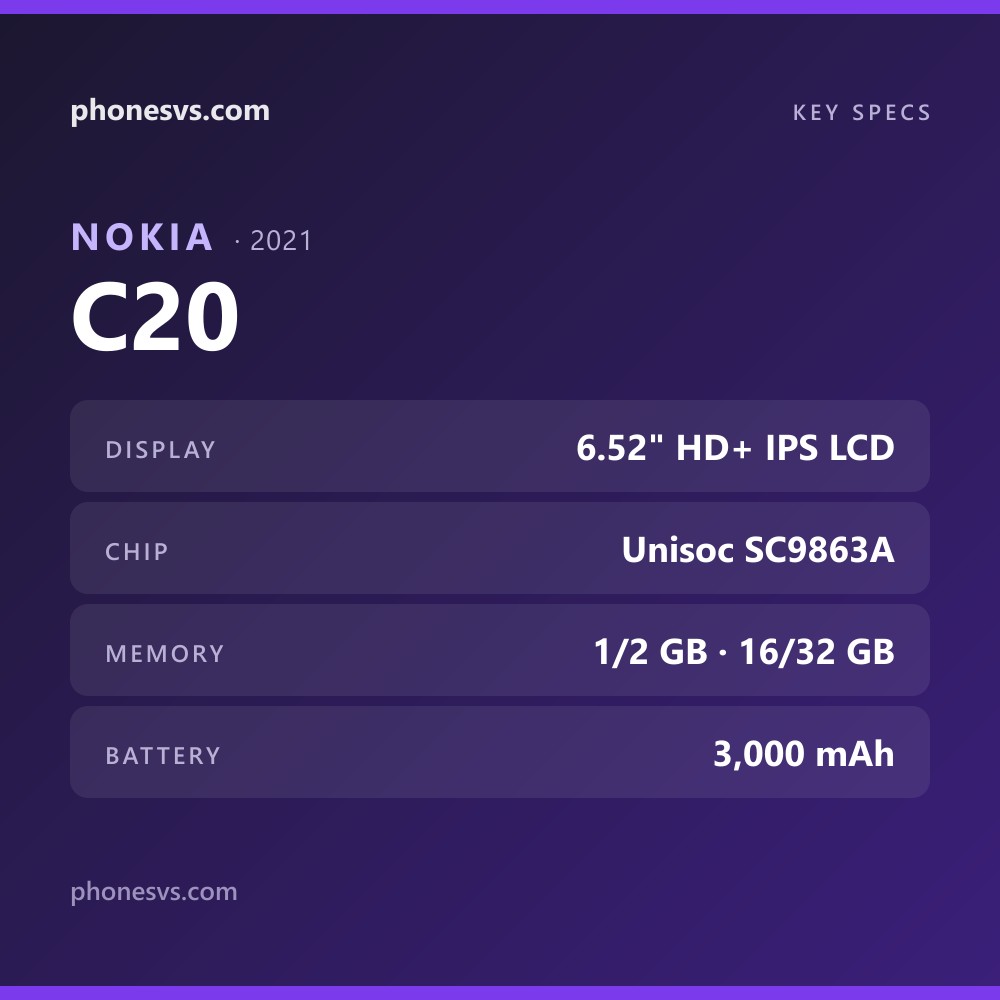
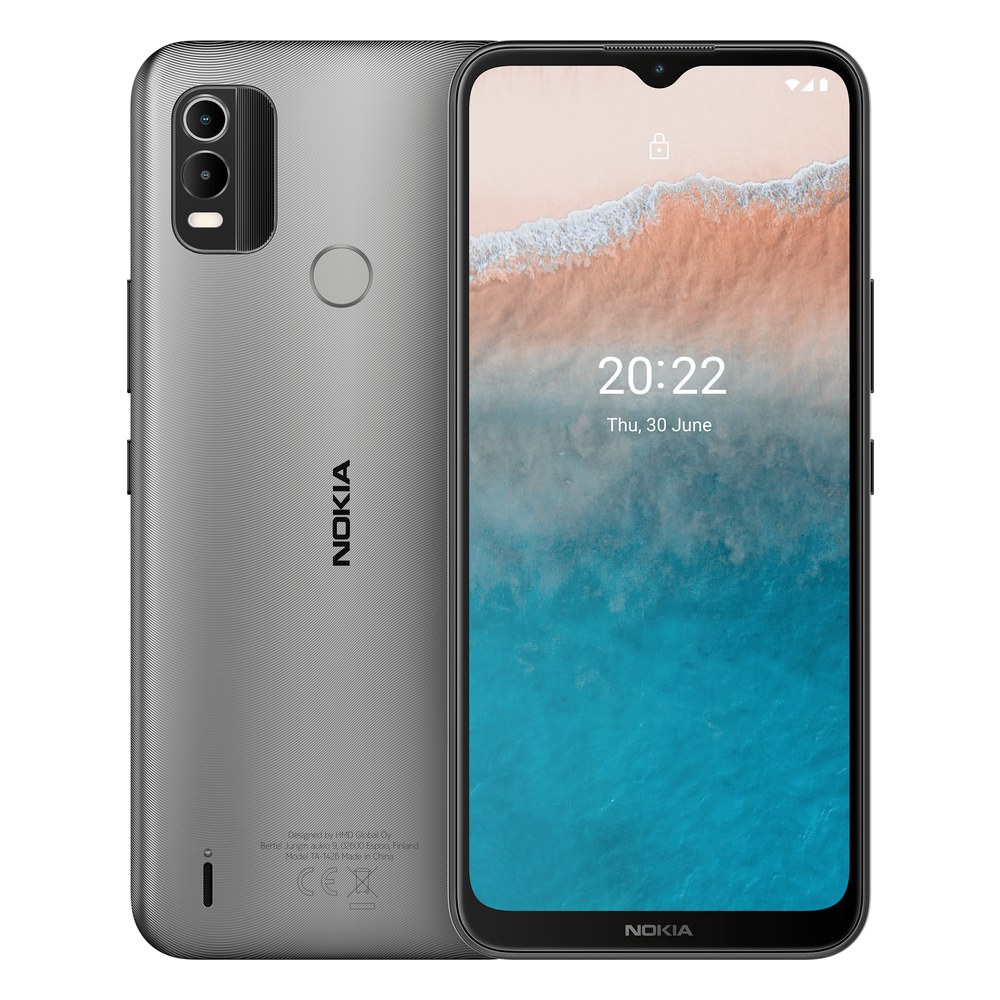
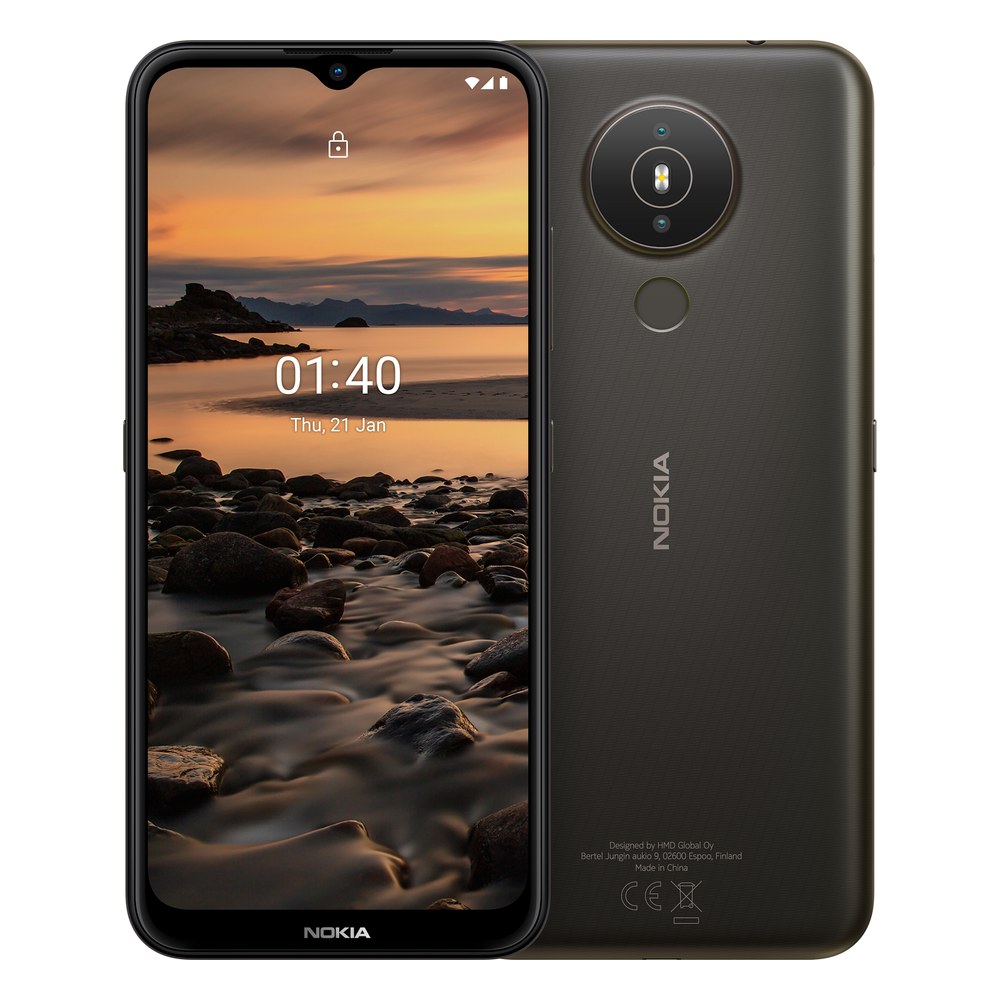
Compare Nokia C1 2nd Edition with similar devices
Open a ready-made comparison or pick any second device below.
Pick a category, then type two model names.
Choose two different devices from the list.
More from Nokia
Frequently asked questions
When was the Nokia C1 2nd Edition released?
The Nokia C1 2nd Edition was released on 2021-08-27, according to the manufacturer’s published information.
What are the main specs of the Nokia C1 2nd Edition?
Headline figures for the Nokia C1 2nd Edition: Display: 5.45", Chipset: Unisoc SC7731E, RAM / storage: 1 GB RAM · 16 GB, Main camera: 5 MP, Battery: 2,500 mAh. The full specification table is further up this page.
How big is the battery of the Nokia C1 2nd Edition?
The battery capacity is 2,500 mAh, below the median of the 355 phones we list with this figure (5,050 mAh).
What display does the Nokia C1 2nd Edition have?
The display measures 5.45", below the median of the 367 phones we list with this figure (6.7"). The resolution is 1,440 × 720 pixels.
What camera does the Nokia C1 2nd Edition have?
The main rear camera is listed at 5 MP, below the median of the 372 phones we list with this figure (50 MP). The spec sheet lists a single rear camera. The front camera is listed at 5 MP, below the median of the 359 phones we list with this figure (16 MP).
Is the Nokia C1 2nd Edition worth buying?
That depends on your priorities. Use the editorial review on this page for our view, check the rankings above to see where the device stands on battery, display and camera, and compare it directly with similar models before you decide.