Smartwatches
Withings ScanWatch Light
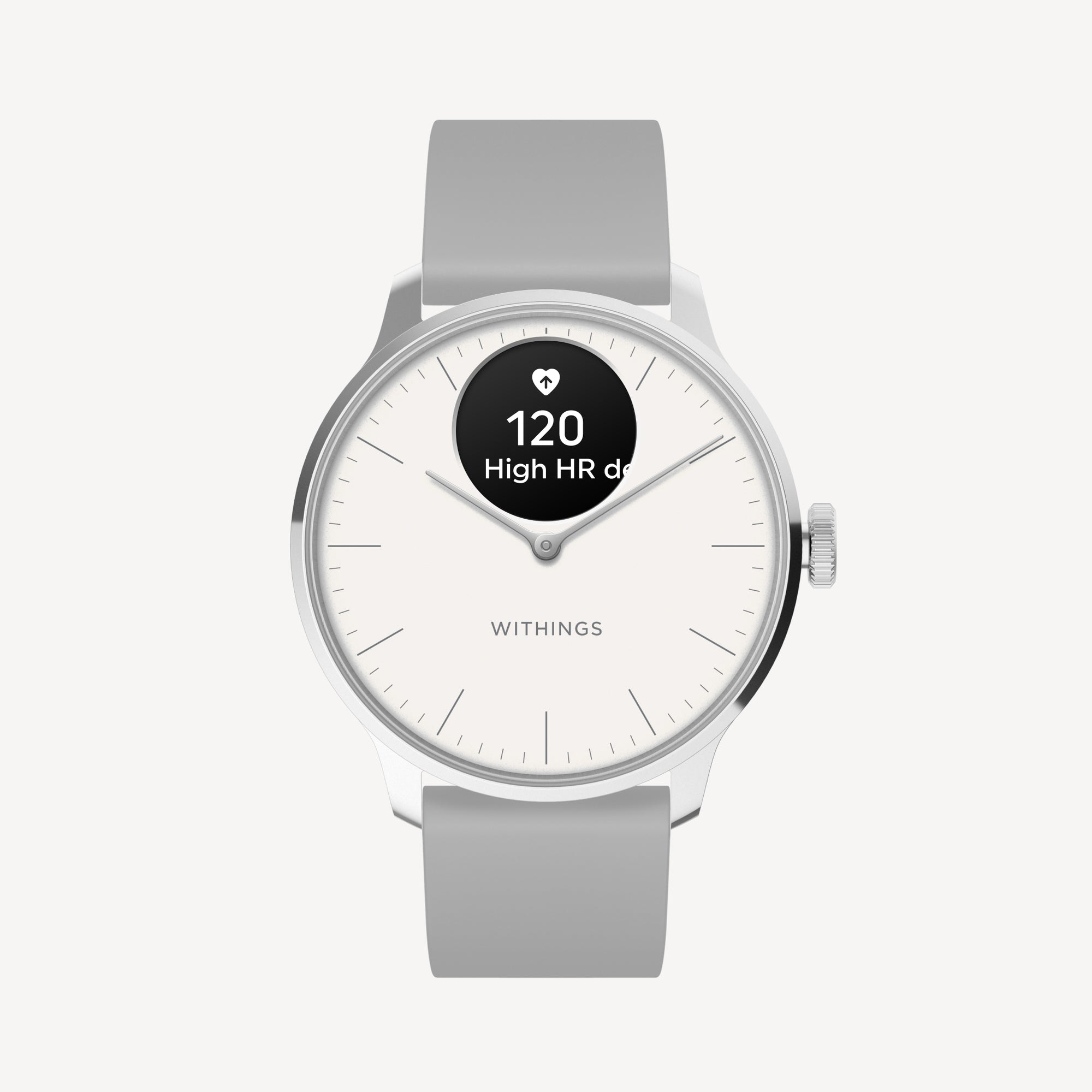
The cheaper, slimmer ScanWatch: analog hands, a small OLED display, sleep and heart rate tracking and up to 30 days of battery, but no ECG, SpO2 or temperature sensor.
Key figures at a glance
Gallery
Specifications
- Display
- Analog hybrid dial with 0.63" grayscale OLED sub-display (14504 px, 282 PPI)
- Case
- 37 mm (36.8 mm diameter, 9.85 mm thick), stainless steel, Gorilla Glass, 27.1 g without wristband, 18 mm FKM wristband
- Battery
- Up to 30 days (launch claim; Withings now states up to 35 days), about 2 hours to charge
- Water Resistance
- 5 ATM (50 m)
- Health Sensors
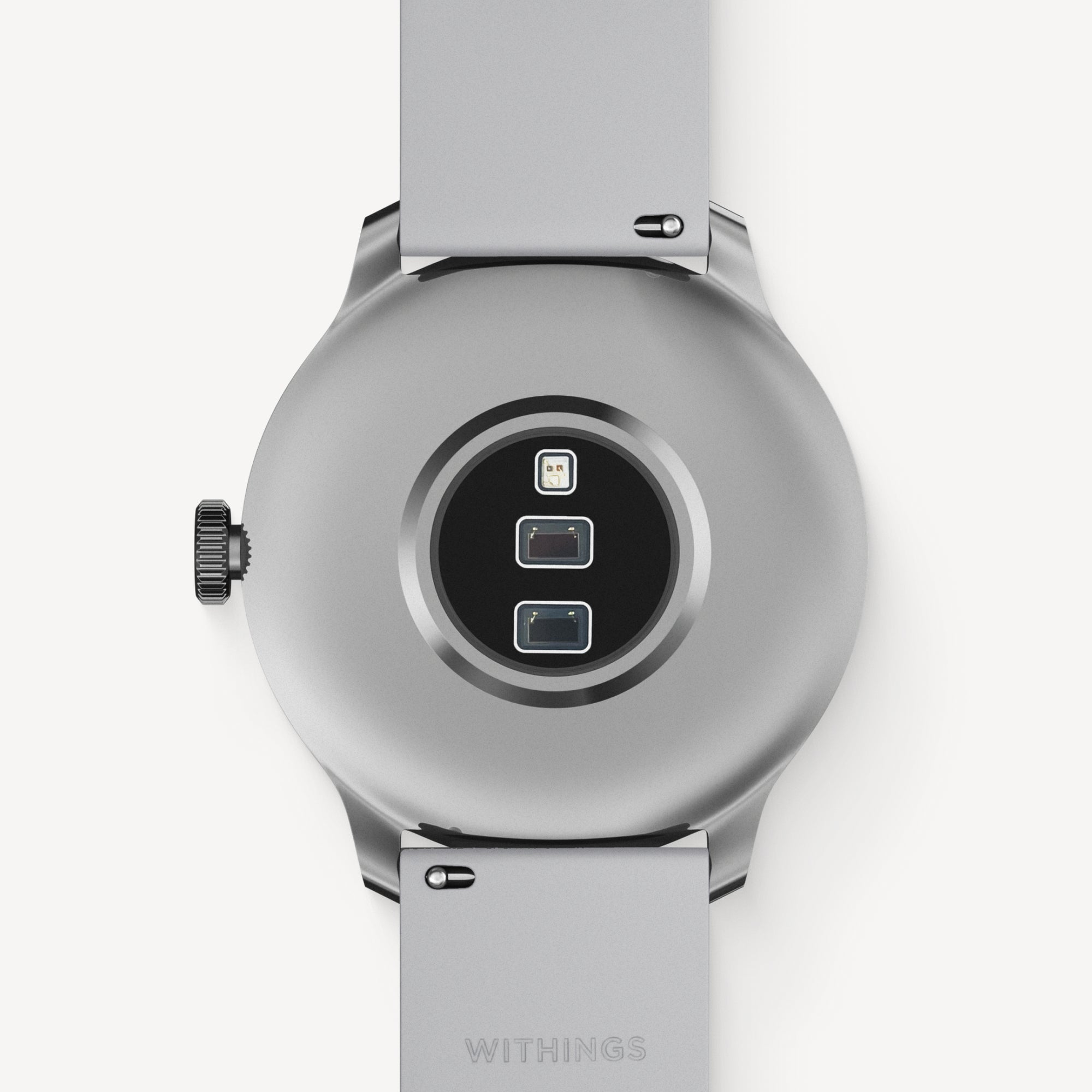
- Multi-wavelength PPG heart rate sensor, HDR accelerometer (no ECG, SpO2 or temperature sensor)
- Features
- Heart rate notifications, respiratory scan, sleep tracking, VO2 max, menstrual cycle logging, 40+ automatic activities
- OS
- HealthSense, iOS 15+ / Android 9+ compatible
- Colours
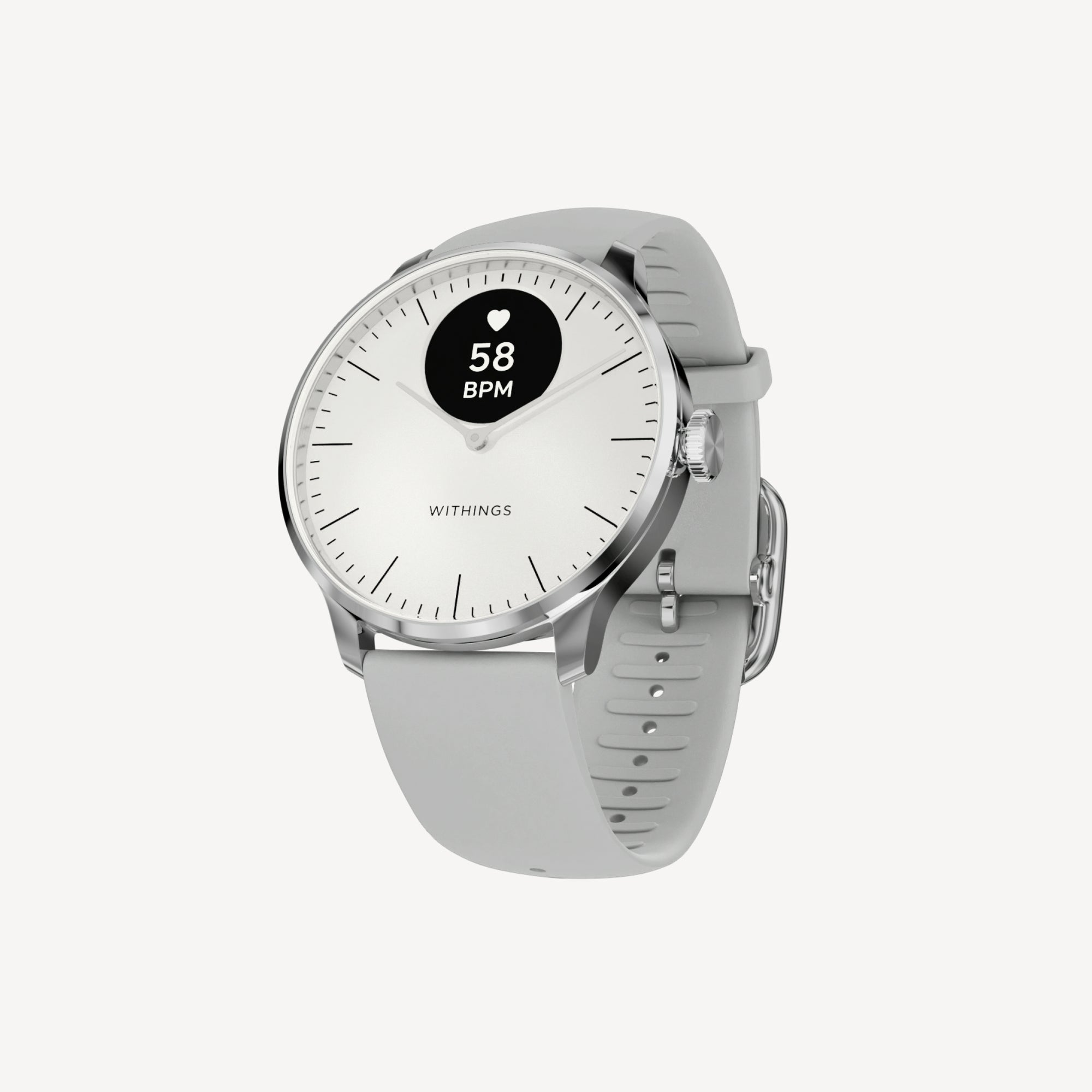
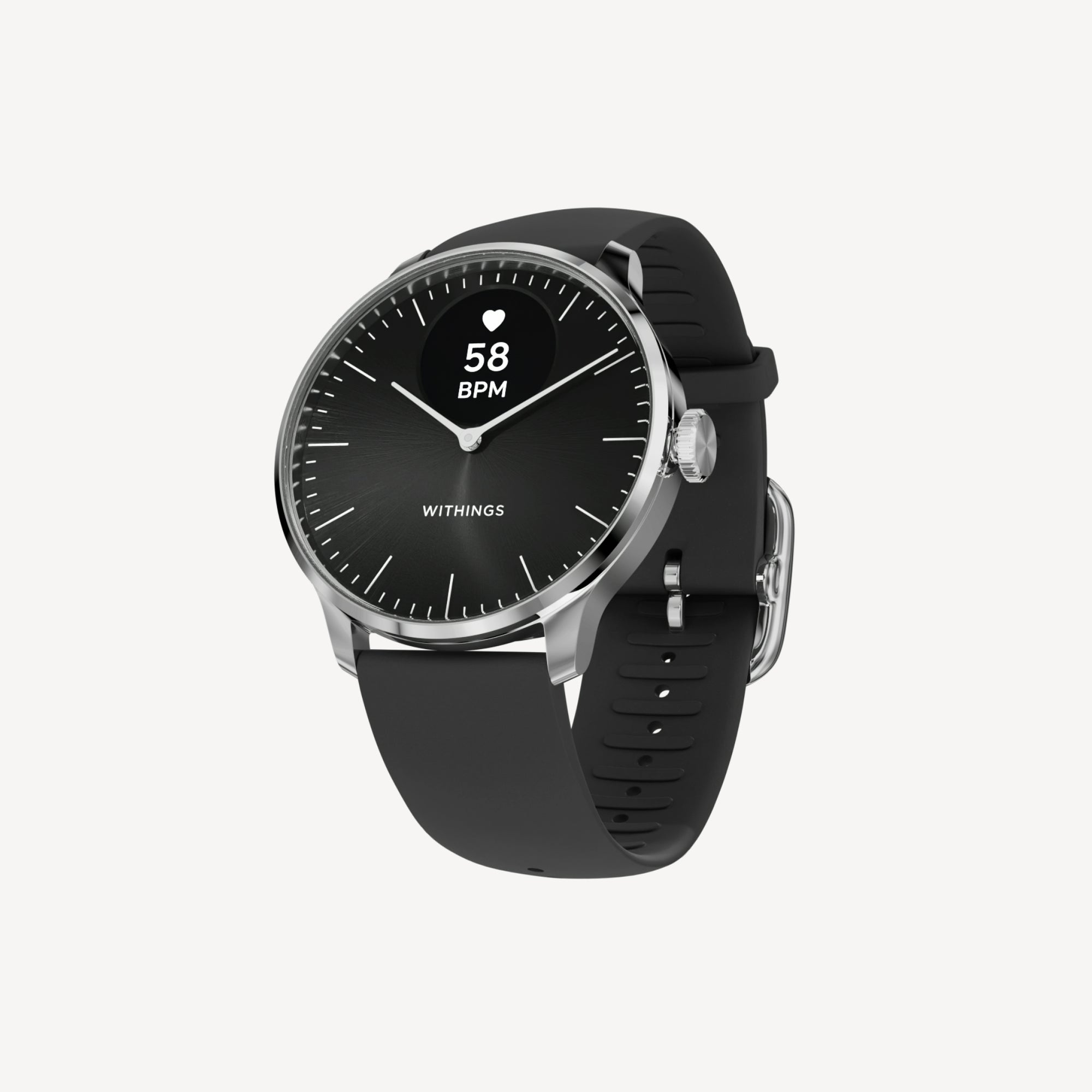
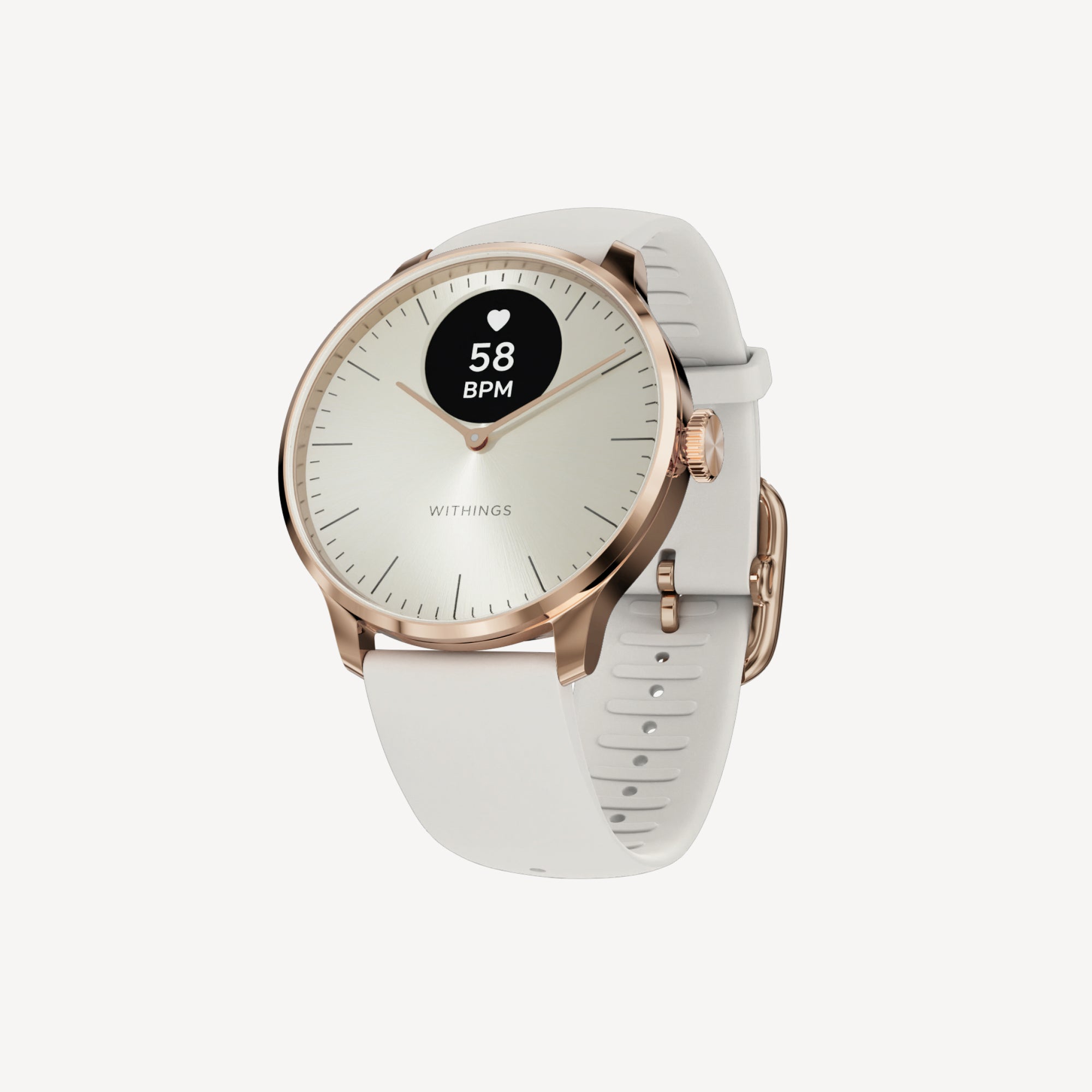
- Black, white, rose gold and white
The Withings ScanWatch Light is the more affordable and slimmer member of the ScanWatch generation that Withings announced on 31 August 2023. Like its bigger sibling it combines analog hands with a small circular OLED display and a long battery life, but it leaves out the ECG, SpO2 and skin temperature sensors in exchange for a lower price and a thinner 37 mm case. This page is a spec-and-information-based review built from Withings' launch press release, its support pages and its current product pages, and it marks where a figure has changed since launch.
Where it sits in the lineup
Withings describes the ScanWatch Light as the most affordable model in the range, aimed at people at the beginning of their health journey who want better and more advanced tracking for non-stop daily care. At launch it was priced at 249.95 US dollars, 249.95 euros or 229.95 pounds, with pre-orders on Withings' own website and wider retail availability from October 2023. The more capable flagship is the Withings ScanWatch 2, which adds ECG, SpO2, temperature tracking and an activity dial for 349.95 US dollars. Withings also positions the Light above its older Steel HR hybrid, saying it has a more premium design with durable Gorilla Glass and more advanced health metrics, such as high and low resting heart rate notifications, the respiratory scan and menstrual cycle logging. For a comparison with a mainstream watch, see the ScanWatch Light vs Pixel Watch 3 table.
Design and display
The watch has a 37 mm case, which Withings' support page lists as 36.8 mm in diameter and 9.85 mm thick. That is notably slimmer than the ScanWatch 2 and makes it look more like a conventional dress watch. It weighs 27.1 g without the wristband. The case is stainless steel, the glass is Gorilla Glass rather than the sapphire used on the ScanWatch 2, and water resistance is 5 ATM, which covers swimming. The 18 mm fluoroelastomer wristband fits wrists from 146 to 211 mm. The dial has analog hands and a circular 0.63-inch OLED display with 14,504 pixels and 282 PPI. Per Withings, it shows 16 shades of grey at a brightness of 260 cd and presents heart rate, notifications and information such as your step count. Unlike the ScanWatch 2, the Light has no separate activity dial. At launch the colours were black, white and a rose gold and white combination, and Withings said light blue and light green versions would follow.
What it tracks
Withings states that both ScanWatch models measure steps, distance, elevation and workouts, sleep in light and deep stages, breathing disturbances, heart rate, calories, VO2 max, respiratory scan and menstrual cycle information. The upgraded high dynamic range accelerometer lets the Light recognise more than 40 activities automatically, and the multi-wavelength PPG sensor provides the heart rate data. The Light gives a comprehensive overview of heart health, activity, cycle tracking and sleep monitoring, and it shares the HealthSense operating system with the ScanWatch 2, which Withings says is tuned for around-the-clock monitoring with long battery life.
What it does not have is equally important. According to Withings' support information, the additional features of the ScanWatch 2 are ECG recording with atrial fibrillation detection, SpO2 and temperature tracking, which means the Light is not the choice if you want any of these. That separation is why the price gap exists, and it makes the Light a wellness and activity tracker rather than a cardiac screening device.
Battery life
Like the ScanWatch 2, the Light is designed for around-the-clock monitoring for up to 30 days, according to the launch release, and Withings' current product pages say up to 35 days, with a charging time of about two hours. These are manufacturer claims and the difference between the two numbers suggests that they depend on settings and software, so 30 days is a conservative expectation. Either way, the watch can stay on your wrist day and night for sleep tracking with a charge only once a month or so, which is the main practical advantage over a typical smartwatch that needs a daily top-up.
Software and the app
The Light pairs over Bluetooth Low Energy with the Withings app on iOS 15 or later and Android 9 or later. The app presents a health improvement score with sub-scores for activity, heart health, body metrics and sleep, offers actionable insights and educational content and creates reports for doctors. Notifications can be read on the small display, but the watch is not a platform for third-party apps, and Withings' launch material does not mention calls, payments or stored music. If you want those things, the tiny display and the limited software will feel like a restriction.
Light or ScanWatch 2?
The decision comes down to a handful of differences. The ScanWatch 2 offers ECG recording with atrial fibrillation detection, SpO2, skin temperature tracking, an activity dial, sapphire glass and a choice of 38 mm or 42 mm cases. The Light offers a single 37 mm size, Gorilla Glass, a lower weight of 27.1 g and a launch price 100 US dollars lower. Both share the same display, the same wristband material, the same 5 ATM rating, the same app and the same claims of a month-long battery. If heart rhythm checks or temperature trends matter to you, the extra money buys real sensors. If you mainly want a good-looking watch that counts steps, follows sleep and warns about unusually high or low resting heart rate, the Light covers that at a lower cost.
Putting the numbers in context
A few details are worth remembering when you read the specification sheet. The weight of 27.1 g is for the watch without the wristband, so the total on your wrist will be higher. The display figures describe a small sub-dial, not a full-face screen, so the Light is closer to a traditional watch with an information window than to a miniature phone. And like every consumer wearable, the health data it produces describes trends. A resting heart rate notification is a prompt to pay attention, not a diagnosis. Anyone with a medical concern should talk to a doctor, and anyone who needs ECG or oxygen readings should choose a model that includes them.
Compromises to consider
- No ECG, SpO2 or temperature. The most advanced health sensors are reserved for the ScanWatch 2.
- Small display. A 0.63-inch circular screen shows only brief information and short notifications.
- Not a smartwatch platform. There are no third-party apps, and the launch material lists no calls, payments or music.
- Gorilla Glass, not sapphire. Sapphire is generally the harder-wearing material, so the Light may scratch more easily than the ScanWatch 2.
- Battery claim changed. The 30-day launch figure is now advertised as up to 35 days, so expect variation.
Who it is for
The ScanWatch Light suits people who want a slim, classic-looking watch that quietly tracks steps, sleep, heart rate and cycle data for weeks without charging, and who do not need ECG or temperature readings. It is a good fit for smaller wrists and for anyone who finds full smartwatches too bulky or too demanding. If you are after more health sensors, look at the ScanWatch 2, and if you want apps and calls, compare the Garmin Venu 3 or the Amazfit Balance. You can browse all models in the smartwatches category or check the rankings.
Where it ranks
Compare Withings ScanWatch Light with similar devices
More from Withings
Frequently asked questions
When was the Withings ScanWatch Light released?
The Withings ScanWatch Light was released on 2023-08-31, according to the manufacturer’s published information.
How much does the Withings ScanWatch Light cost?
The estimated range for the Withings ScanWatch Light is $225 to $275 in US dollars, based on the launch list price. Actual prices vary by country, retailer and storage option.
What are the main specs of the Withings ScanWatch Light?
Headline figures for the Withings ScanWatch Light: Battery life: 30 days. The full specification table is further up this page.
Is the Withings ScanWatch Light worth buying?
That depends on your priorities. Use the editorial review on this page for our view, check the rankings above to see where the device stands on battery, display and camera, and compare it directly with similar models before you decide.