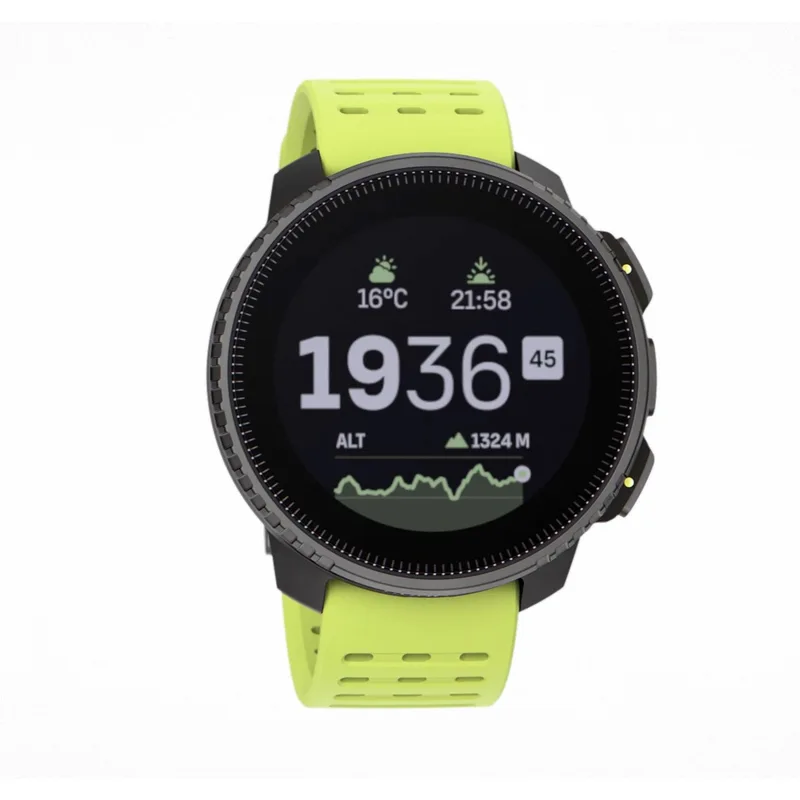
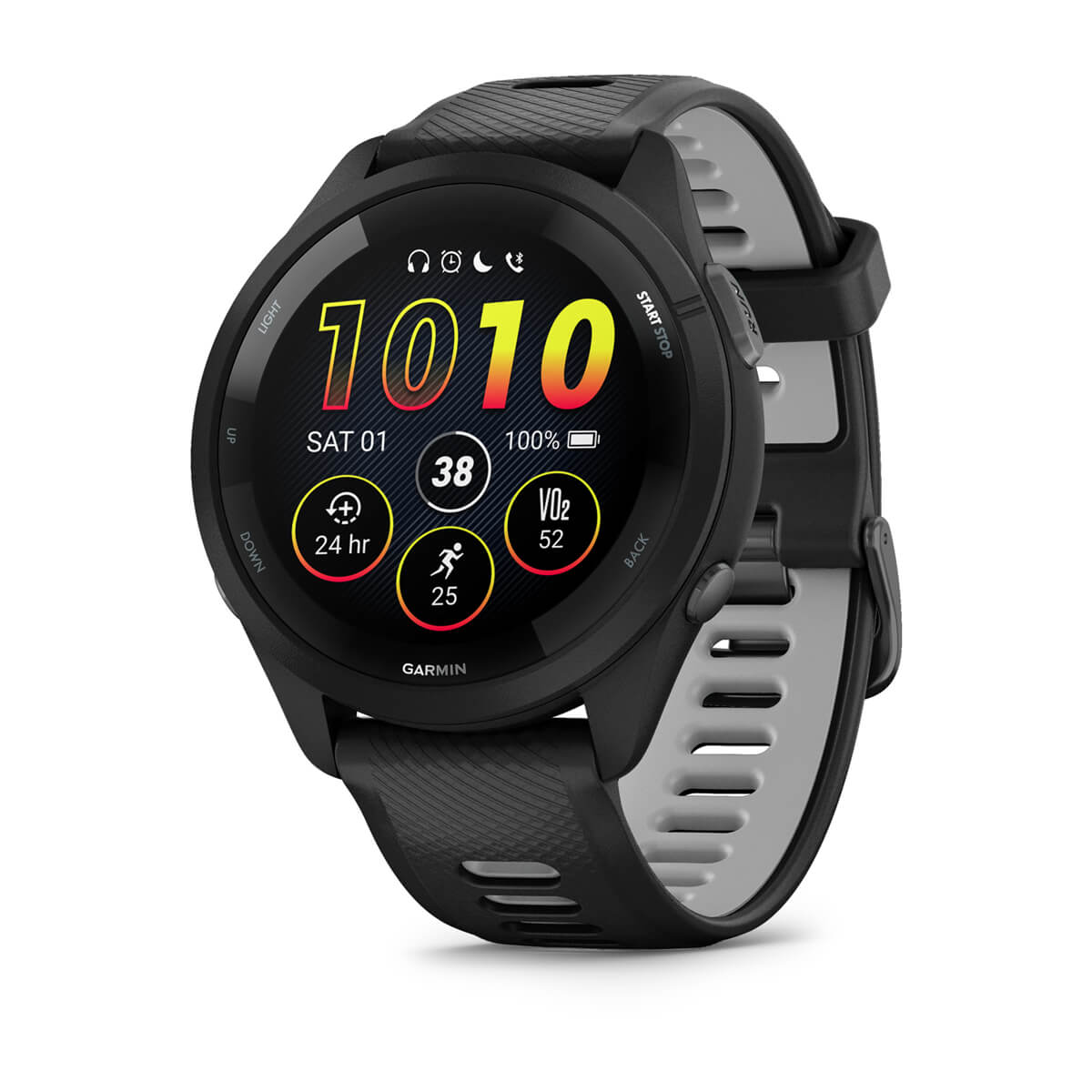
| Display | 1.4" colour matrix touchscreen, 280 x 280, always-on, sapphire crystal | 1.3-inch AMOLED touchscreen (416x416) with optional always-on mode, plus five physical buttons (Forerunner 265, 46 mm) |
|---|
| Storage | 32GB for offline maps | Up to 8GB for music and data; Spotify, Deezer and Amazon Music downloads (subscription required) |
|---|
| Battery | Up to 30 days smartwatch mode (60 days with solar), up to 65 hours GPS training multi-band (90 hours with solar) | Up to 13 days in smartwatch mode (up to 15 days for the 265S); up to 20 hours in GPS mode (24 hours for the 265S) (Garmin claims) |
|---|
| Dimensions | 49 x 49 x 13.6 mm, 86 g | — |
|---|
| Case | Stainless steel bezel, glass-fibre reinforced polyamide case, 22 mm silicone strap | 46.1 x 46.1 x 12.9 mm (Forerunner 265) |
|---|
| Water Resistance | 100 m | — |
|---|
| Navigation | Dual-band GNSS (L1 + L5), GPS / GLONASS / Galileo / QZSS / BeiDou, offline maps, digital compass, barometric altimeter | Multi-band GPS with SatIQ technology; PacePro pacing guidance |
|---|
| Sensors | Optical heart rate, blood oxygen, barometer, compass, thermometer | — |
|---|
| Sports | More than 95 preinstalled sport modes | — |
|---|
| Connectivity | Bluetooth, Suunto app (iOS and Android) | — |
|---|
| OS | Suunto firmware with SuuntoPlus | Garmin firmware; pairs with Android and iOS through the Garmin Connect app |
|---|
| Sizes | — | 46 mm Forerunner 265 and 42 mm Forerunner 265S |
|---|
| Training | — | Training readiness, morning report, daily suggested workouts, Garmin Coach, VO2 max, running power and running dynamics |
|---|
| Health | — | Wrist-based Pulse Ox, Body Battery, sleep score, HRV status, stress tracking, menstrual cycle tracking |
|---|
| Features | — | Garmin Pay, smart notifications, incident detection and LiveTrack |
|---|
| Durability | — | 5 ATM water rating |
|---|